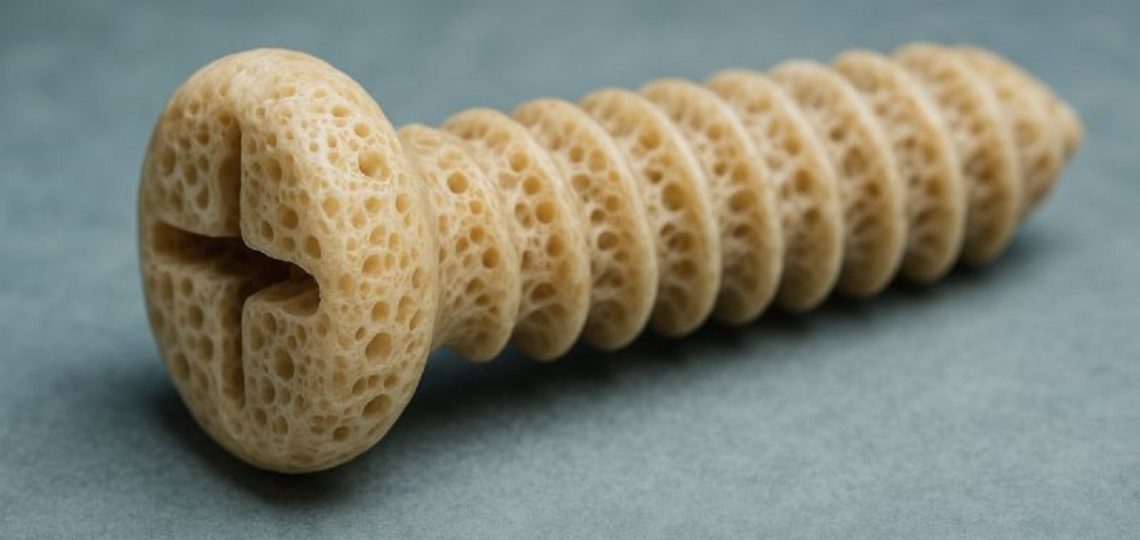
Biomimetic Pins and Screws: Advancements in Dental Surgery
Biomimetic pins and screws design is reshaping oral and maxillofacial surgery by creating fixation devices that mimic the structure, mechanics, and behaviour of living tissue, from bone-like stiffness to bioactive surfaces and controlled resorption. In dentistry, this shift is visible in next‑gen pins, tacks, and screws used for guided bone regeneration (GBR), block graft fixation, and orthognathic stabilization. These solutions aim to reduce secondary surgeries, improve osseointegration, and optimise healing biology. (1),(2). 1) What makes a fixation device “biomimetic” in dentistry? In oral surgery, biomimetic refers to materials and designs that replicate key properties of natural tissues, such as a bone-like modulus to limit stress shielding, graded or textured surfaces to cue osteogenesis, and bioresorption that aligns with the bone-healing timeline. These concepts are central to modern oral biomaterials research and are being applied to both implant surfaces and fixation hardware.(1),(2). Two broad strategies dominate: Material biomimicry: Using resorbable polymers (PLLA/PLGA) or magnesium alloys that are gradually replaced by bone, eliminating routine hardware removal. Magnesium, in particular, offers metal-like strength with controlled biodegradation properties. (3), (4), (5) Surface and topology biomimicry: Applying bioactive or ECM‑like coatings (e.g., hydroxyapatite, collagen, BMP‑2, antimicrobial peptides) or micro/nano‑texturing to boost cell adhesion, antibacterial performance, and … Continue reading Biomimetic Pins and Screws: Advancements in Dental Surgery
