Stainless Steel Crown for Pediatric patients, How to select, prep and cement it
Tips For SS Crown

Indications :
1- following Pulp Therapy
2 - patient at high risk of caries
3 - Multi surface caries restoration
4 - Deciduous teeth with developmental defects, such as amelogenesis imperfecta, dentinogenesis imperfecta, enamel hypoplasia
5 - Teeth with extensive wear
6 - Where it is likely that the restoration will fail
7- Fractured teeth
8 - Abutment for space maintainer (crown and loop)
9 - Patients who are unlikely to attend follow up appointments

- The problem we are facing is that we have many sizes of the SS crown from 2 to 7.. so we don’t know which size will work for the tooth we are working on.. so we try till getting the right size, and this takes a lot of time .. so, Here more ways than one.
1- The first and most accurate way:
By using calliper and measure the mesio-distal dimension of the tooth, then measuring the MD of SS crown and get the exact size ..
2- The second method is the one I follow:
By using periodontal probe and do the same thing ..measuring the MD dimension of the tooth and the crown and choose the exact size
3- The third method:
And it is that we get any file and measure the MD dimension with it and see how many milliliters it is on the ruler ..
- But the stopper of the file may not come very correctly with you, especially since the stopper comes at the beginning of the file became loose, so you will find it moving easily with any touch..
Whatever method you will use, you will need to try on two sizes of ss crowns, because the difference in dimensions will not be very large, so you will try on two to make sure of your size.
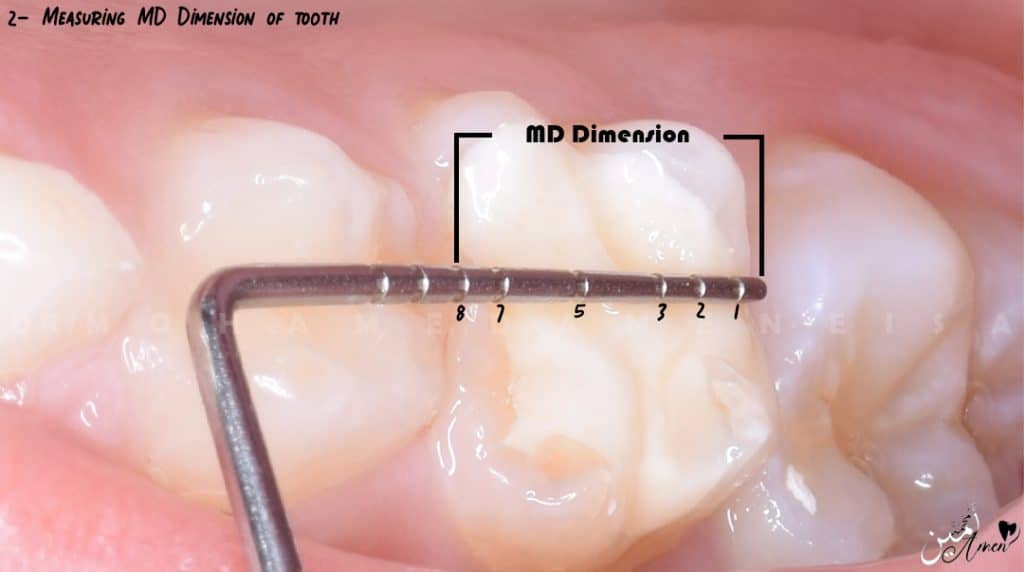
Measured By Periodontal Probe

Crown Selection = E2
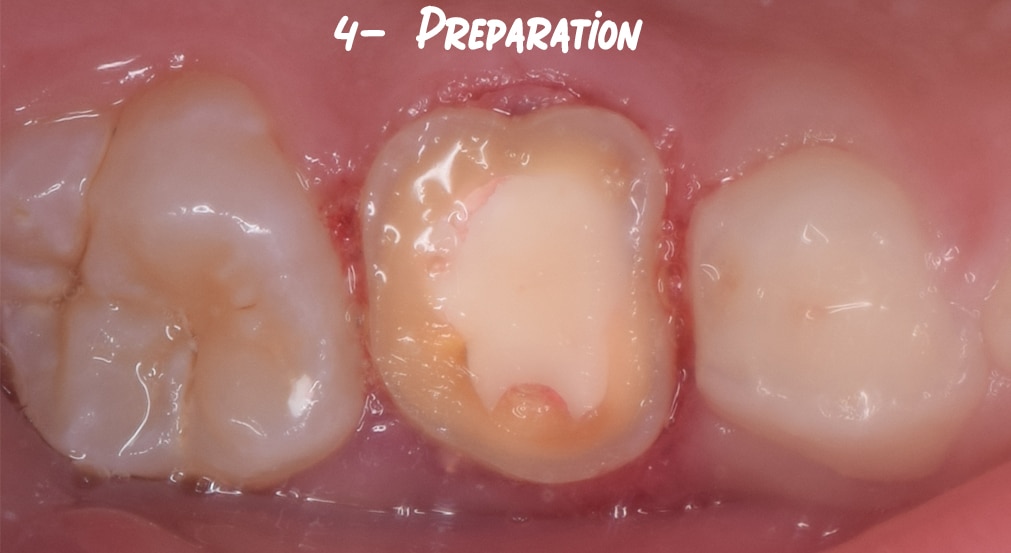
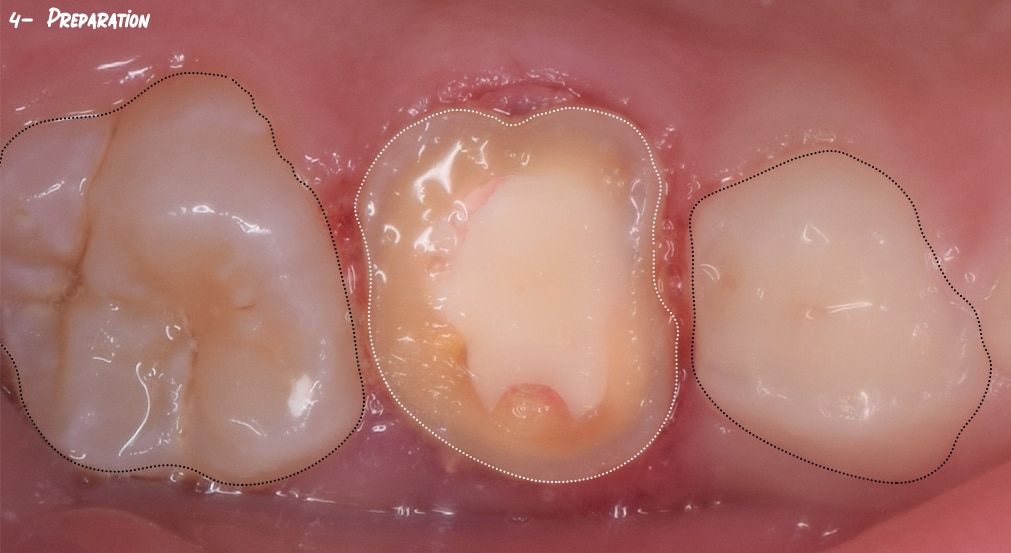
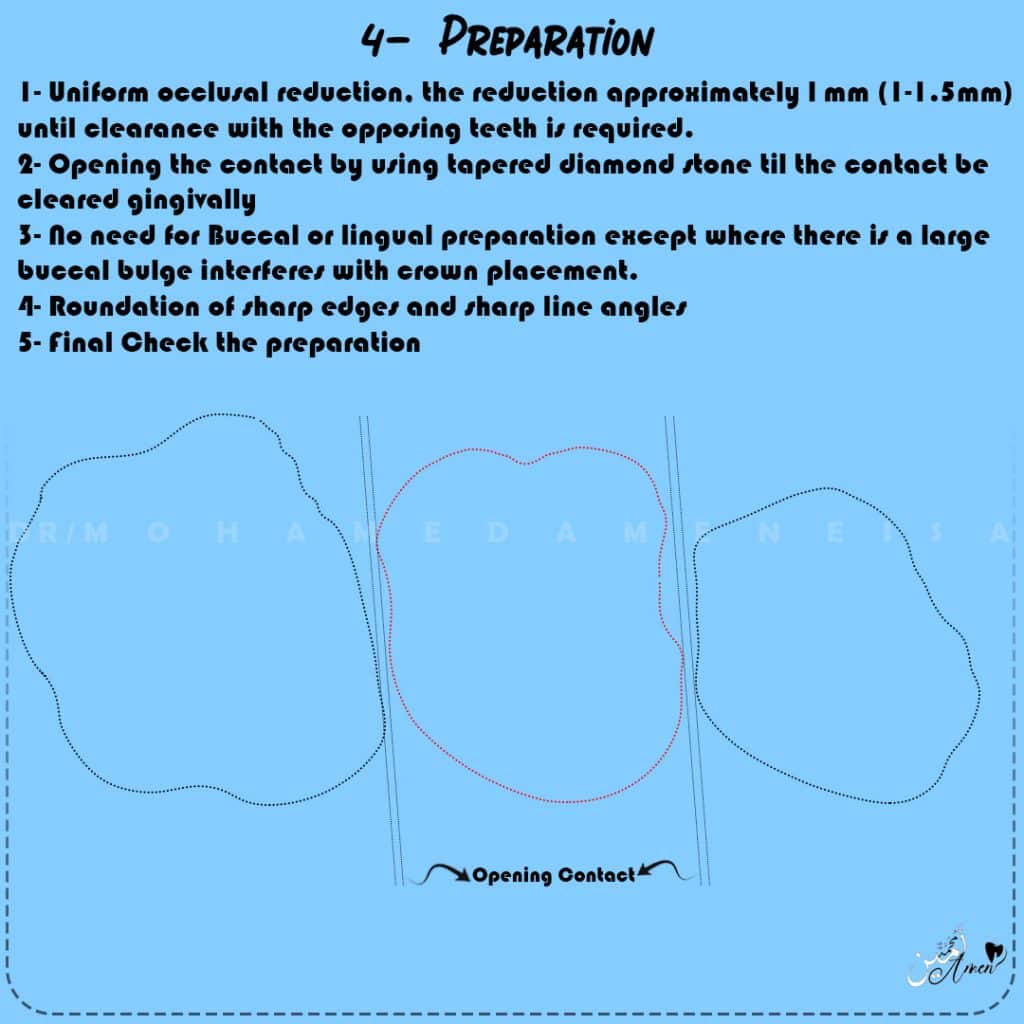
In prep, we depend mainly on two things
1- contact opening
2- occlusal reduction
- We open the contact with diamond stone, preferably the finishing stone with a yellow coding, or any thin diamond stone to protect the adjacent.
- When opening the contact, we open it subgingivally, because the contact in the primary teeth situated gingivally than permanent teeth

- The most important thing, which is the occlusion .. We must check the occlusion before we do cementation, because if the crown is high or the child's bite is not correct, this will be a huge problem ..
- We are supposed to check the occlusion before preparing .. but in this case the opposing was badly destructed and fractured restoration .. so I did not rely on it in the occlusion analysis ..
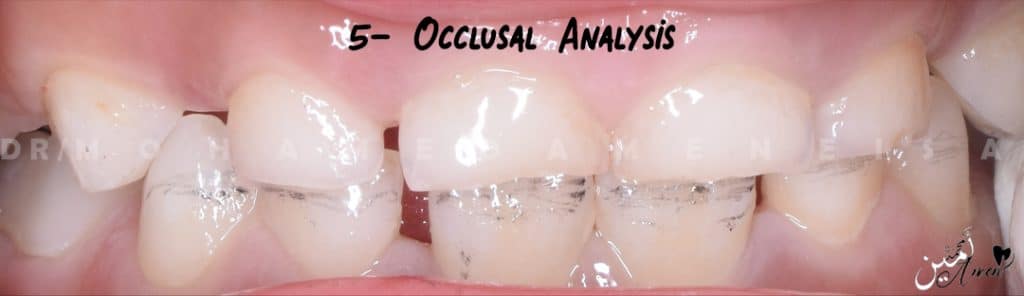
- I relied on a guide that I made for myself so as not to forget the occlusion shape while I was doing a try in ..
- You let the child bite his natural bite and mark it with a pencil on the teeth so that this remains a guide for you when you do a try in .. (Don't forget to erase the marks after you're done)
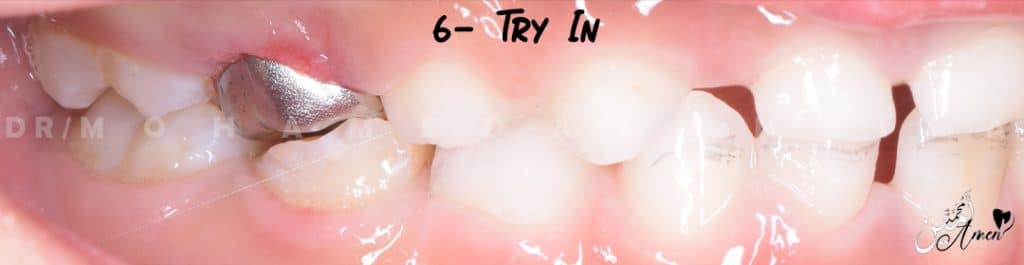
- Here in the try in I relied on the guide that I did + the upper and lower 6 relationship ..
- Also, do not forget to ask the child whether there is high points or not.
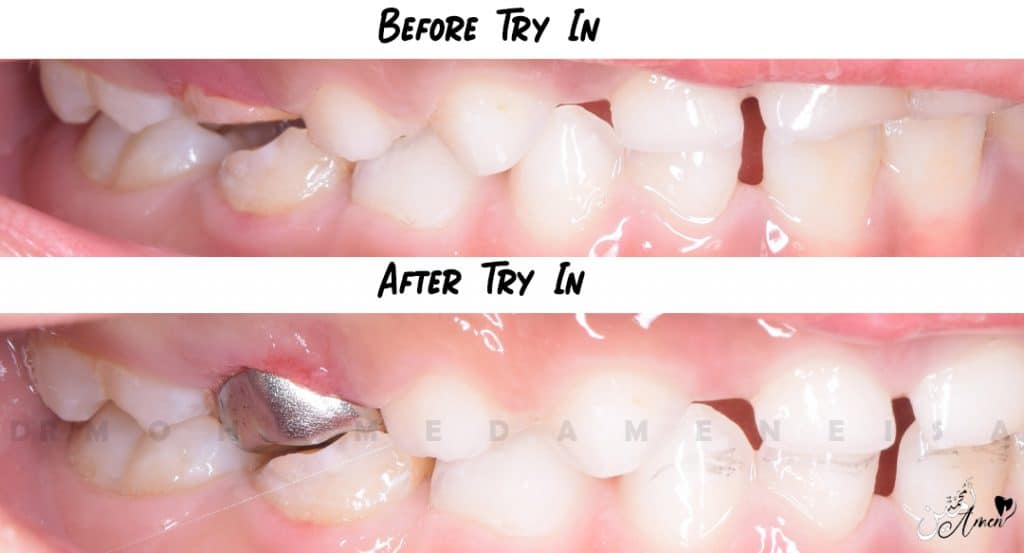

Cemented by GIC


Share on:
