The introduction of Micro Dentistry and recent advances in bonding agent contributes to the rapid increase in composite resin restorations in posterior teeth, However, composite still has minor drawbacks; ones of them are time‑consuming and needs excellent operator’s skills to achieve harmonious occlusal and cusp‑fossa relationship with opposing teeth. To overcome this, an alternative placement technique of composite restoration was introduced.
The new “stamp” technique consists of fabricating an occlusal matrix that mimics the natural occlusal anatomy of posterior teeth, before cavity preparation takes place that allows mimicing the original tooth morphology. This article will point to some tips to that simplify this technique (A step-by-step description of the technique and clinical figures illustrates the method).
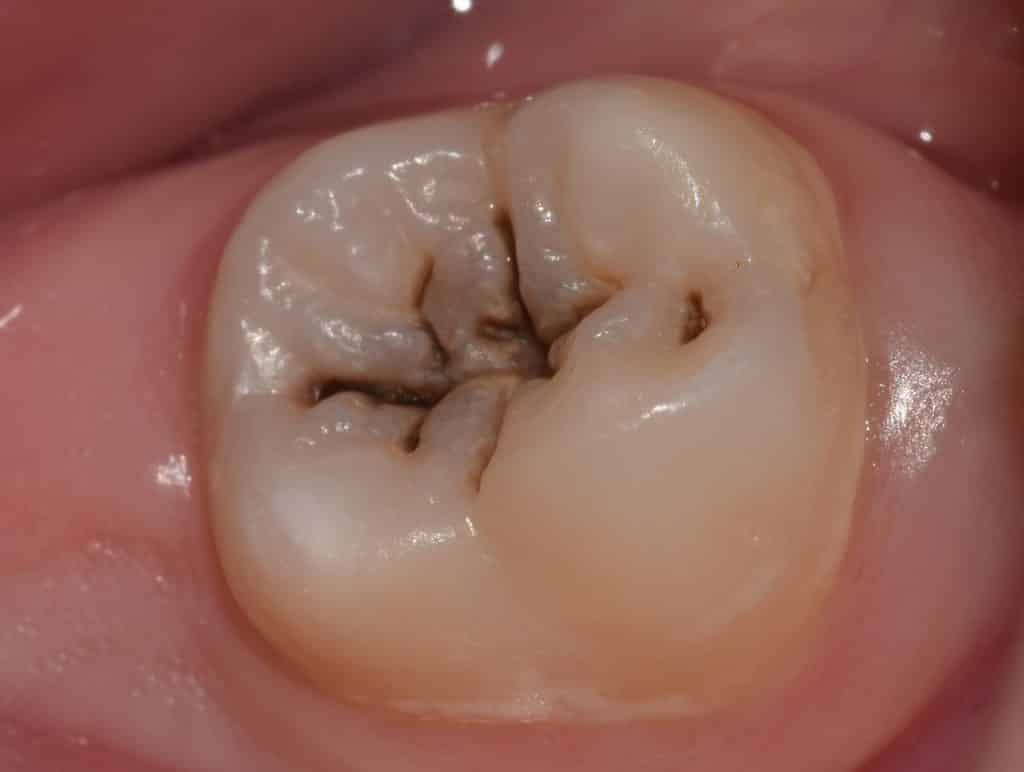
Patient came to the clinic seeking treatment for this tooth with pit and fissure caries (class 1), after examination the diagnosis was tooth with irreversible pulpitis that need a direct composite restoration as a treatment choice.

Application of a thin layer of Petroleum Jelly (Vaseline®) as a separating medium using adhesive applicator, this step useful in blocking deep areas of occlusal groove which have many advantages in next steps:
1-Easy removal of rubber dam liquid (LiquiDam) during impression step.
2-Easy application and removal of occlusal imprint (liquiDam) over composite layers.
3- Shallow occlusal grooves in final restoration (less plaque stagnation).
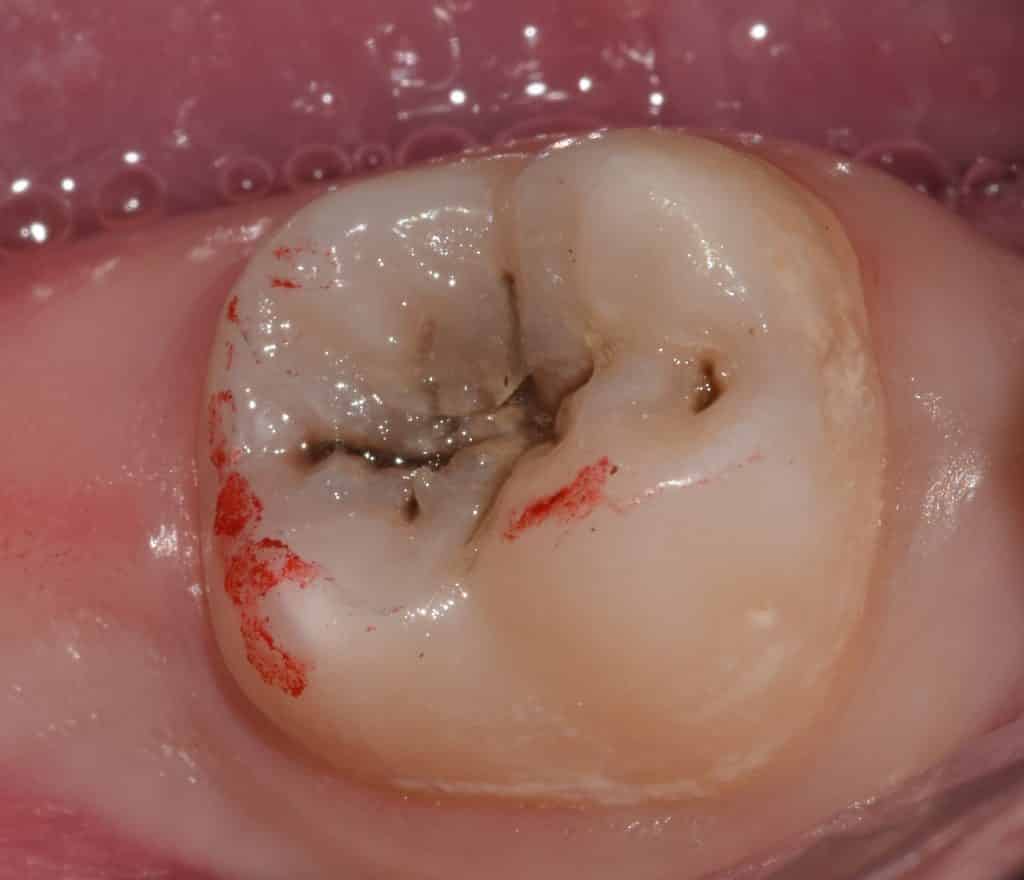
Checking of the occlusion before drilling.

First the liquid dam was dispensed over the occlusal surface by syringe and the burnisher inserted inside the material, then the light was applicated for polymerization of material.
Advantage of burnisher are
Hard instrument that have resistance to deformation during application and removal of occlusal print.
Have a good retentive bull end for holding the liquid dam.
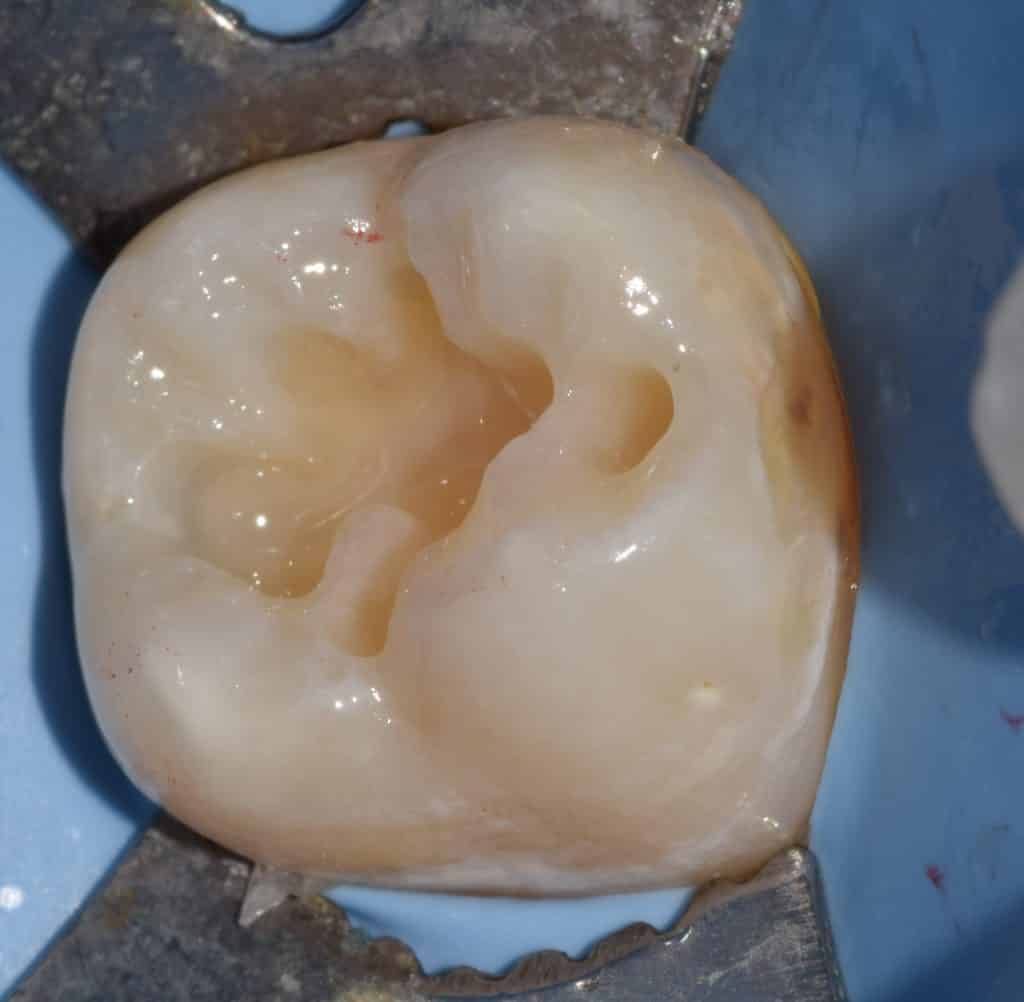
Caries removal and rubber dam application.
Then proceeding for etching, bonding, and composite layers application
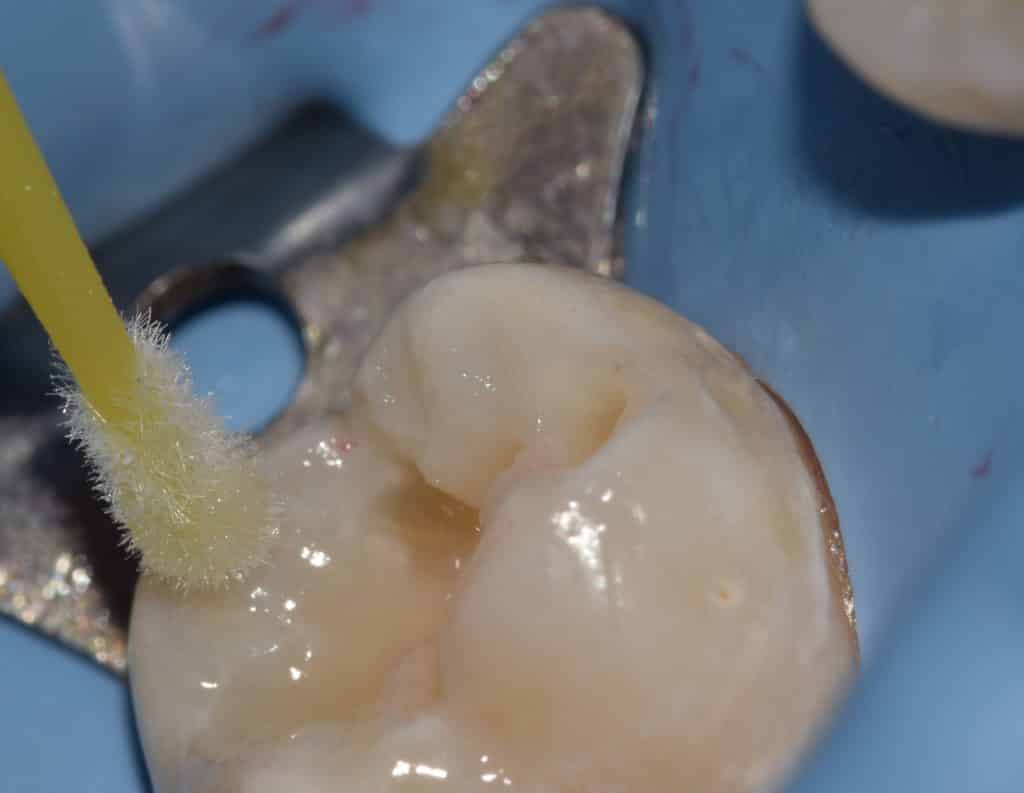
Over each occlusal composite increment, a modeling resin was used for adaptation of composite and reduce it’s stickiness to the incoming occlusal imprint.

Application of occlusal imprint over the composite layer using burnisher with controllable force.
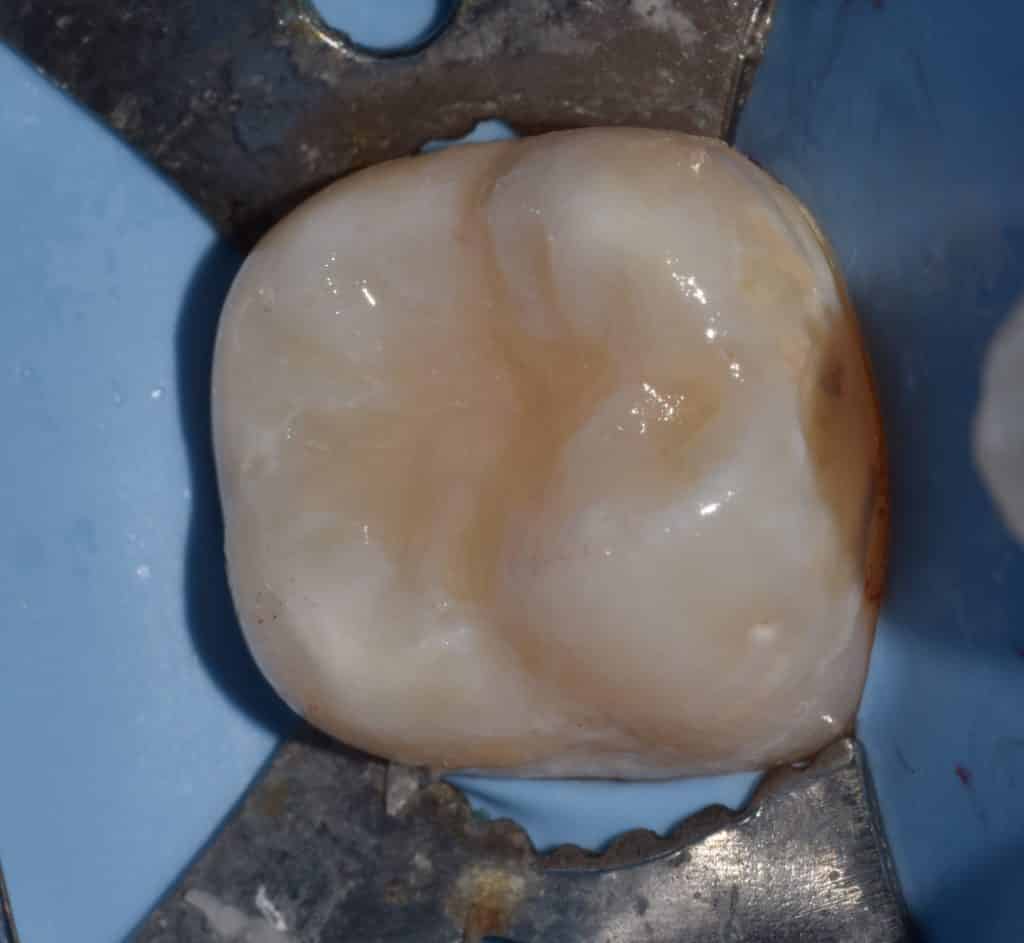
Immediate after final layer
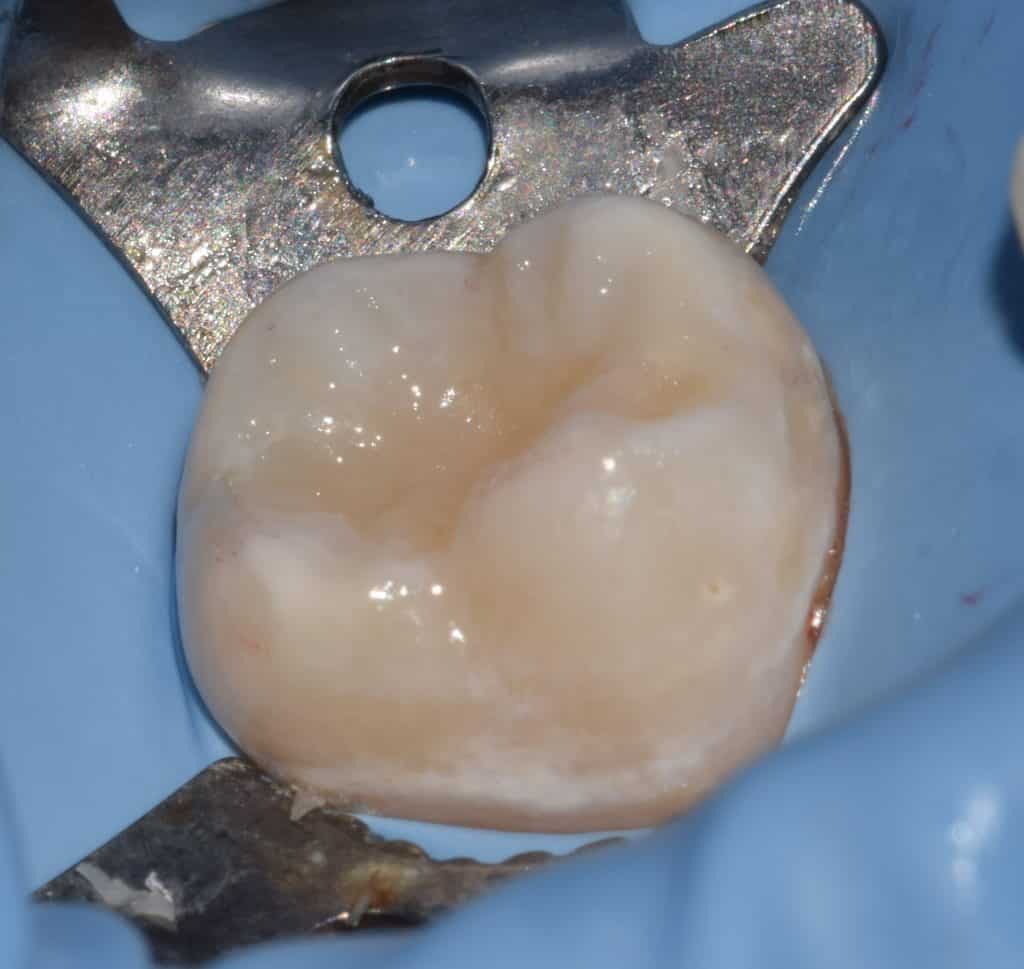
Immediate after final layer
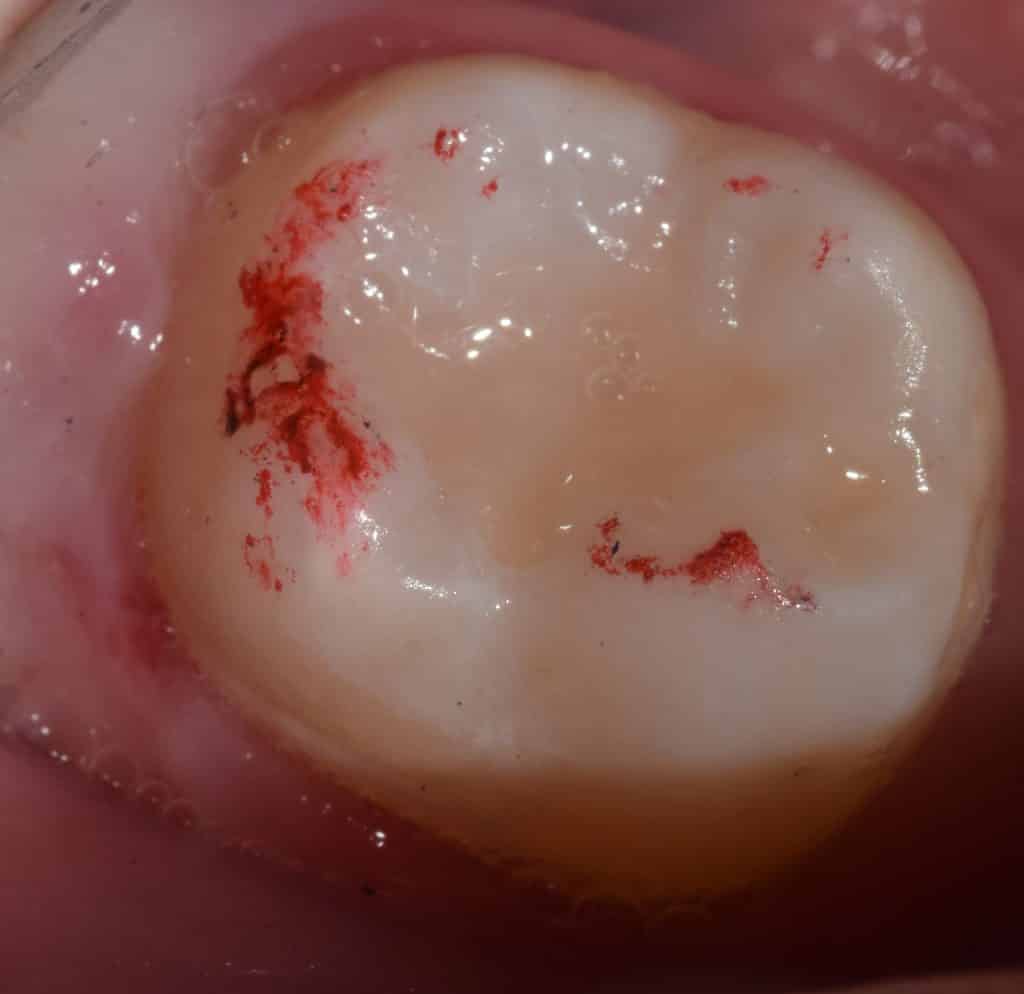
Immediately after rubber dam removal and occlusal check, no need for occlusal adjustment.
Share on:
