Tooth wear can result from abrasion, attrition and erosion. Research has shown that these wear mechanisms rarely act alone, and there is nearly always a combination of the processes. Evaluation and diagnosis should account for the patient’s diet, history of eating and gastric disorders, along with the present state of the occlusion.
Once a complete understanding of the etiology of the dentition’s present state is appreciated, a treatment plan can be formulated, taking into account the number of teeth to be treated, condylar position, space availability, the vertical dimension of occlusion and the choice of restorative material.
Iniital

initial photo with severe worn down dentition

Right

Left


Master cast for the diagnostic wax up


Anterior dentition after resin build-up
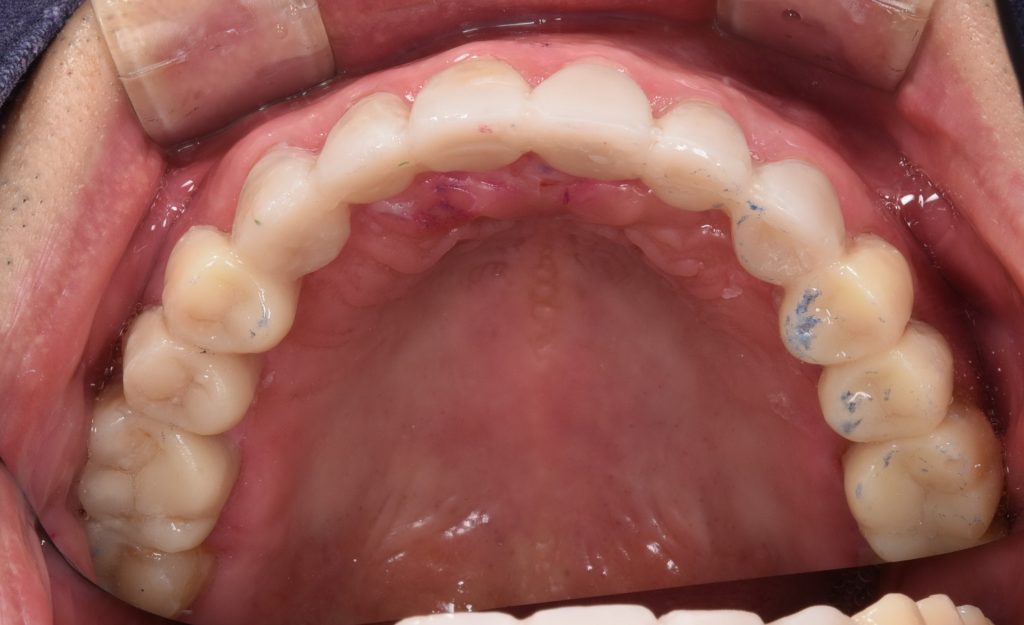


Comparison between inital and post operation

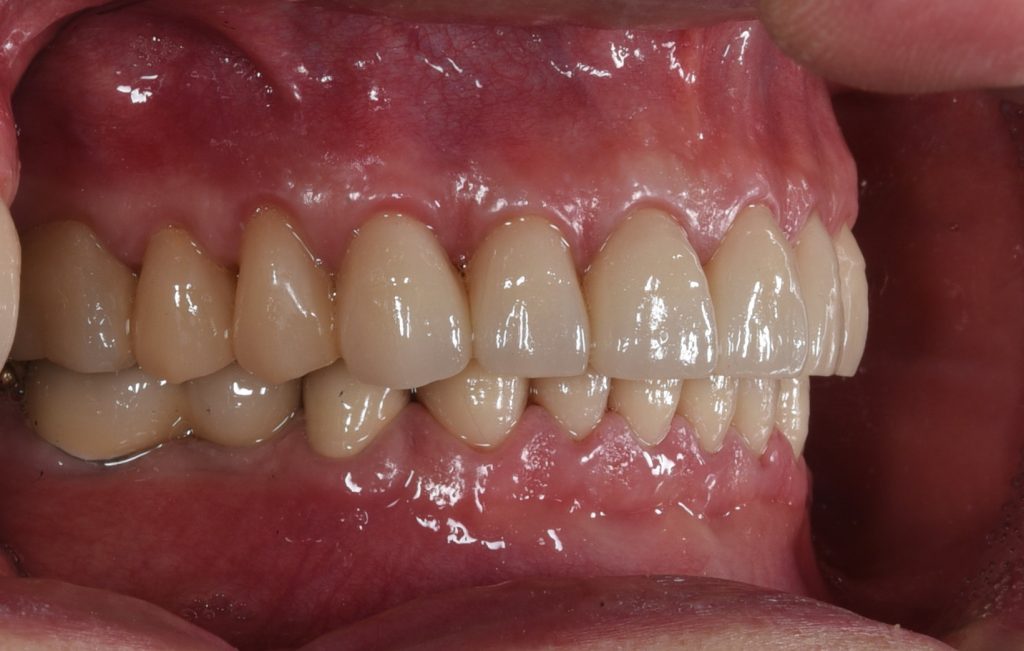


Final Prosthetics
Conclusion
Severe wear dentition presents challenges to the restorative dentist, including patient’s esthetic satisfaction while also presenting functional factor for long term prognosis. The maintenance of severe wear cases can be ensured by the development of proper anterior guidance that allows for posterior disclusion within the patient’s envelope of function. Taking this guidance into account during provisionalization allows minimal adjustments in the definitive restorations long term predictability of the case.
Share on:
