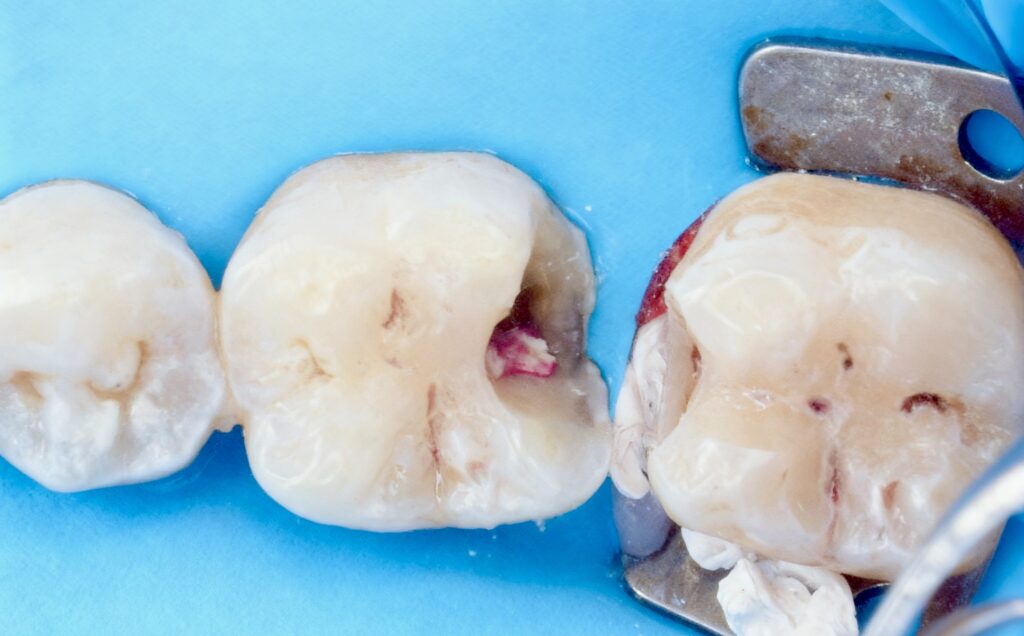
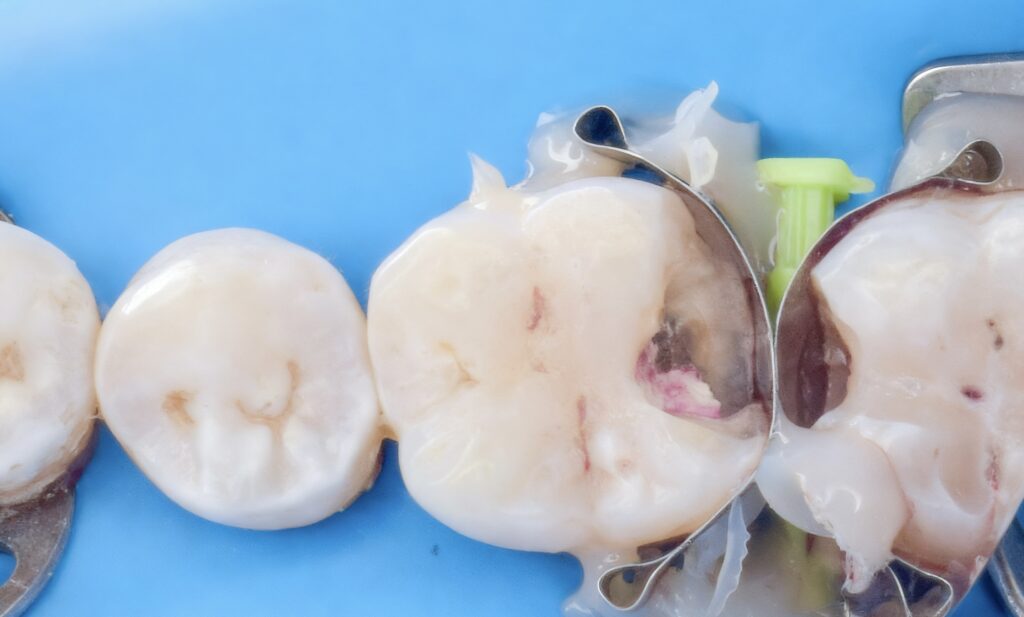
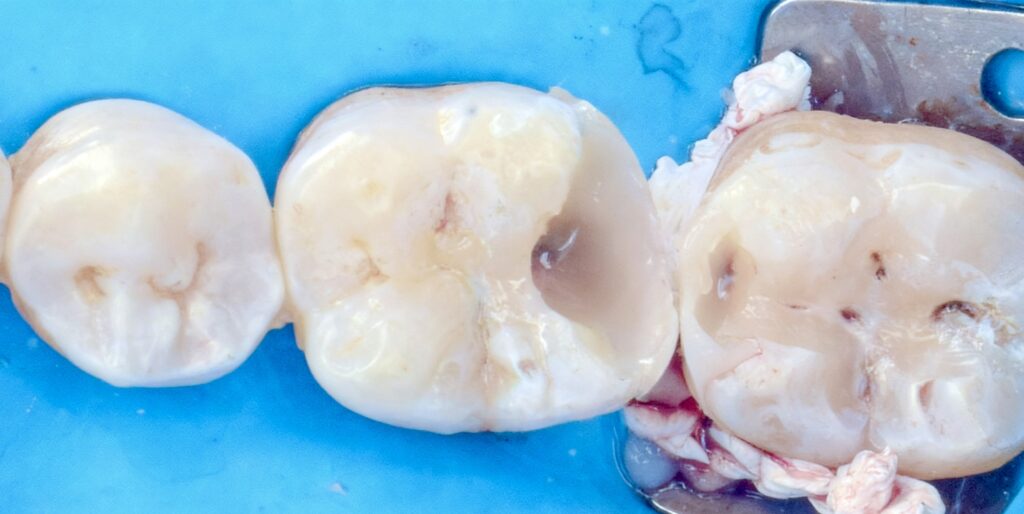
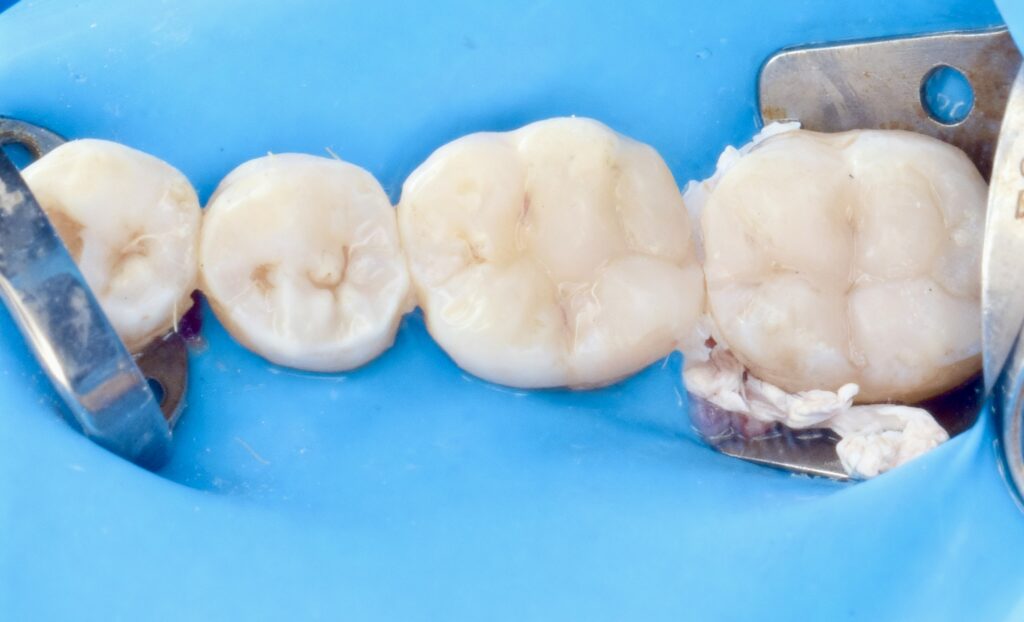
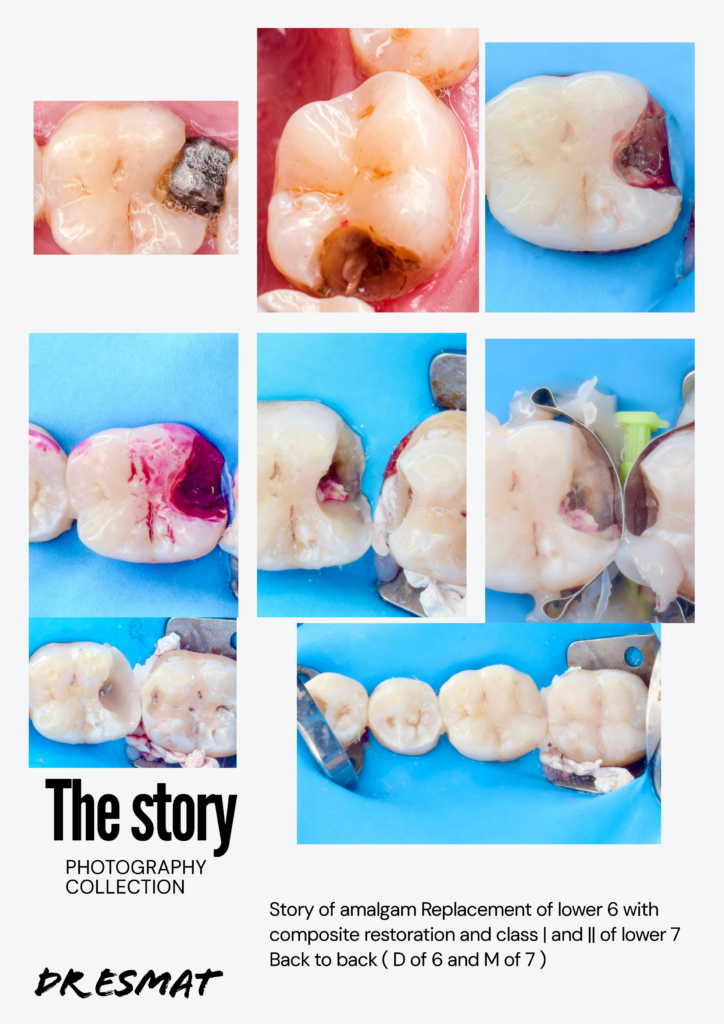
 This case report describes the replacement of a defective amalgam restoration associated with recurrent caries, along with the management of occlusal and proximal lesions in posterior teeth. A minimally invasive approach using adhesive composite restoration was performed following proper diagnosis, isolation, and caries removal.
Introduction
Amalgam restorations have been widely used due to their durability; however, over time they may fail due to marginal breakdown, secondary caries, or esthetic concerns. Replacing defective amalgam restorations while preserving tooth structure is a key principle in modern restorative dentistry.
Case Presentation
A patient presented with discomfort in posterior teeth. Clinical examination revealed:
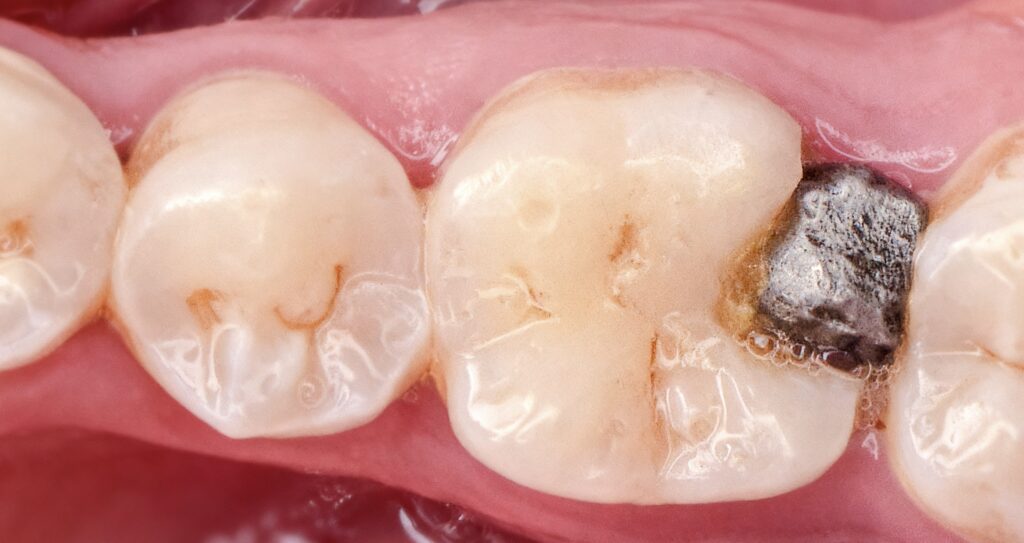
- Defective amalgam restoration with marginal breakdown
- Recurrent caries adjacent to the restoration
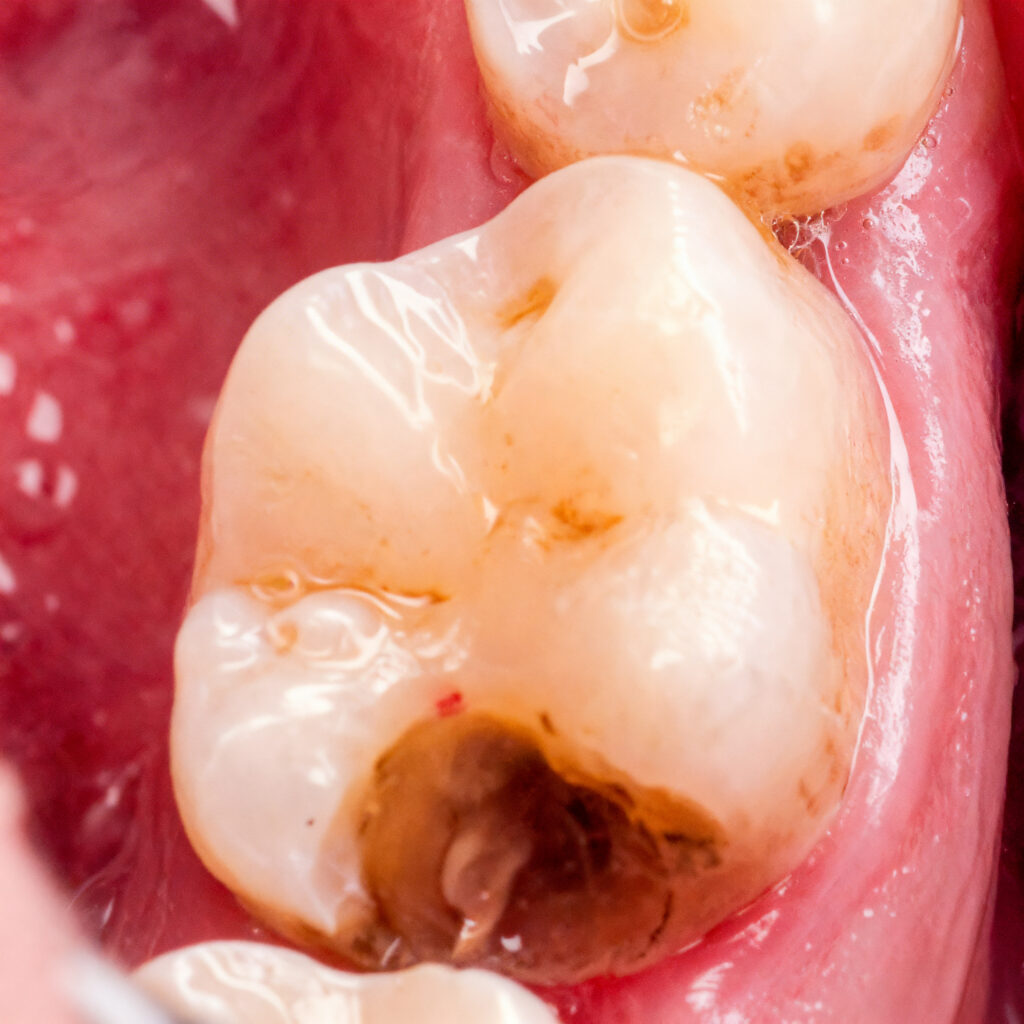
- Occlusal and proximal carious lesions in molars
The findings indicated the need for amalgam replacement and caries management.
Clinical Procedure
1. Diagnosis and Treatment Planning
- Identification of failed amalgam restoration
- Detection of secondary (recurrent) caries
- Decision for composite restoration
2. Removal of Amalgam
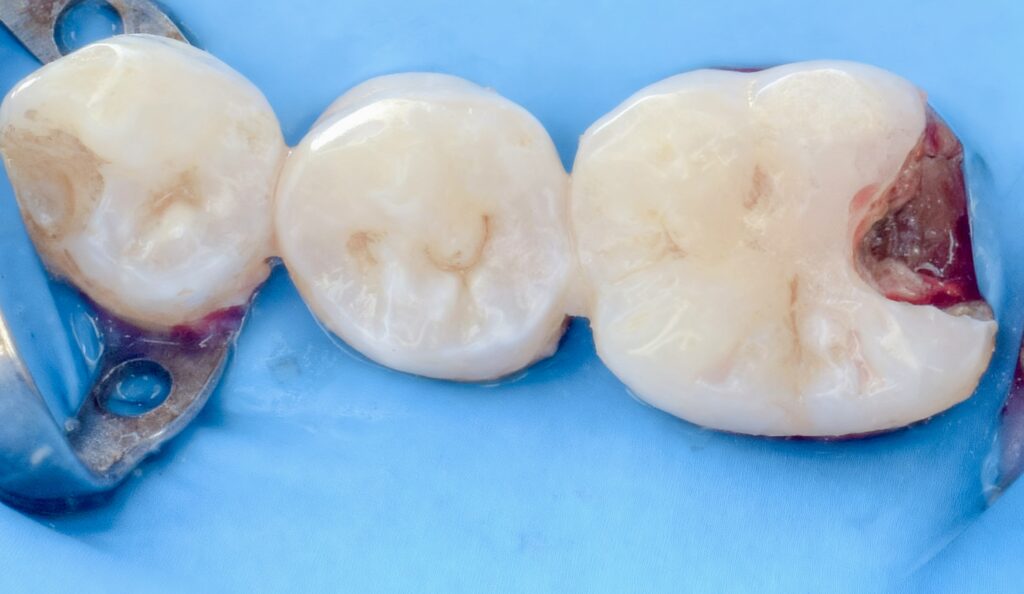
- Old amalgam restoration was carefully removed
- Underlying caries was exposed
- Tooth structure was preserved as much as possible
3. Isolation
- Rubber dam applied for moisture control
- Ensured a clean and dry operative field
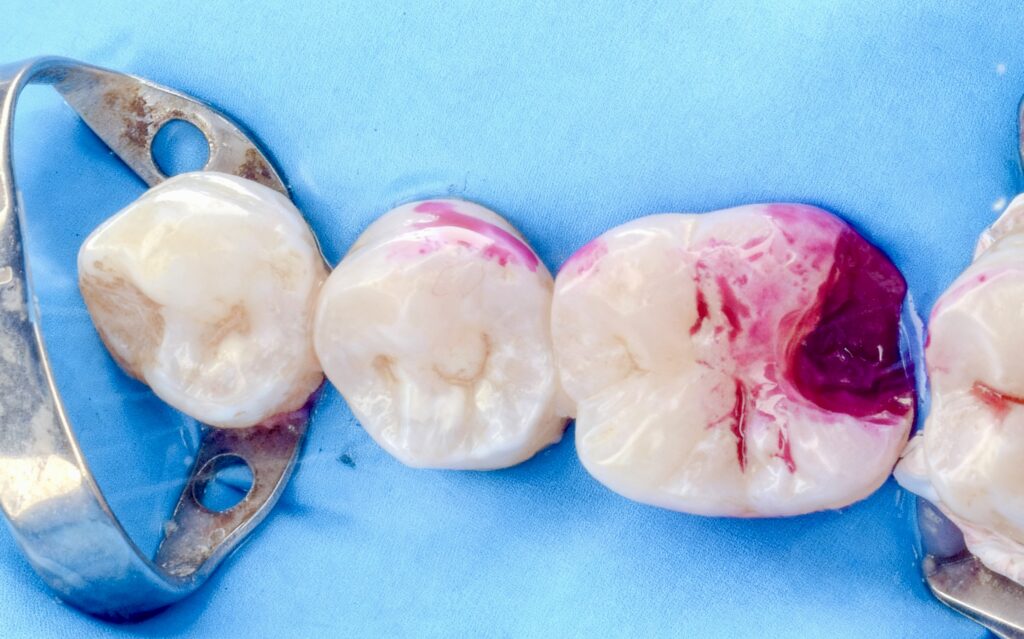
4. Caries Detection
- Caries detector dye used to highlight infected dentin
- Allowed selective and conservative caries removal
5. Cavity Preparation
- Removal of infected dentin
- Preparation of proximal box for Class II restoration
- Refinement of cavity margins
6. Adhesive Restoration
- Etching and bonding protocol applied
- Incremental placement of composite resin
- Proper reconstruction of occlusal anatomy
7. Finishing and Polishing
- Occlusion checked
- Restoration polished for smoothness and longevity
Results
- Successful removal of defective amalgam
- Complete elimination of caries
- Functional and esthetic composite restoration
- Good marginal integrity
-
Discussion
This case emphasizes:
- Importance of replacing defective amalgam restorations
- Role of early detection of recurrent caries
- Advantages of composite restorations (adhesion and esthetics)
- Value of minimally invasive dentistry
Replacing amalgam restorations should be based on clinical need, not solely esthetic demand.
-
Conclusion
Amalgam replacement combined with proper caries management can successfully restore function and esthetics in posterior teeth. Adhering to adhesive protocols and conservative principles ensures long-term clinical success.
Share on:
