21 Years old female patient attend with sub-gingival lingual wall fracture of Endodontically-Treated lower first molar
Indirect lithium disilicate overlay was the treatment choise , that choise was not only to restore the tooth but also to Save & Re-inforce .. as the modern adhesive dentistry gives great functional and durable restoration as well as it’s act to save and re-inforce the remaining tooth structure and this is a real good addition for our restoration and make it more durable with repairable failures if occur . furthermore ,and from a point of comparison , such treatment choise will considered to be more advantageous over Post & Core build-up in the point of saving & reinforcing , as the last pushes the tooth into the tooth cycle of death that ends mostly with Catastrophic Unrepairable Failure , So as long as you can gain good Adhesion for such restoration it will last longer . In general words once it’s adhered well to enough tooth structure , such type of restorations considered to be better than Post & Core design in terms of Durability, Saving and Reinforcement for the treatment of most of compromised & Endodontically-Treated teeth .
With this patient Despite the tooth was Compromised & Endodontically-Treated , The overlay get bonded and stay functioning perfect after 1 year without any signs of functional or structural problems, As long as you are applying the right protocol with the concerning steps precisely , it will succeed and survive Regardless the materials being used , As here Universal Bond being used with this case , So the technique is the matter, the material will not make great impact on the final result .. It’s all about the technique .
My preparation design was incorporating little vertical preparation with minimal finish line to expose more enamel for adhesion as little enamel was available , and with some vertical arms that may adds some resistance to torque and lateral forces and act as adjuvant to adhesion as it acts to mitigate stress on bonding interface during funcion , in such a manner the adhesion and the mechanical means will help each other to get the best survival rate .
References :
1-Dietschi D, Duc O, Krejci I, & Sadan A (2008) Biome- chanical considerations for the restoration of endodonti- cally treated teeth: A systematic review of the literature— Part II. Evaluation of fatigue behavior, interfaces, and in vivo studies Quintessence International 39(2) 117-129.
2-Bremer BD, Geurtsen W.
Molar fracture resistance after adhesive restoration with ceramic inlays or resin-based composites. Am J Dent 2001;14:216-220.
3-Magne P. Immediate dentin sealing: a fundamental procedure for indirect bonded restorations. J Esthet Restor Dent 2005;17:144–54.
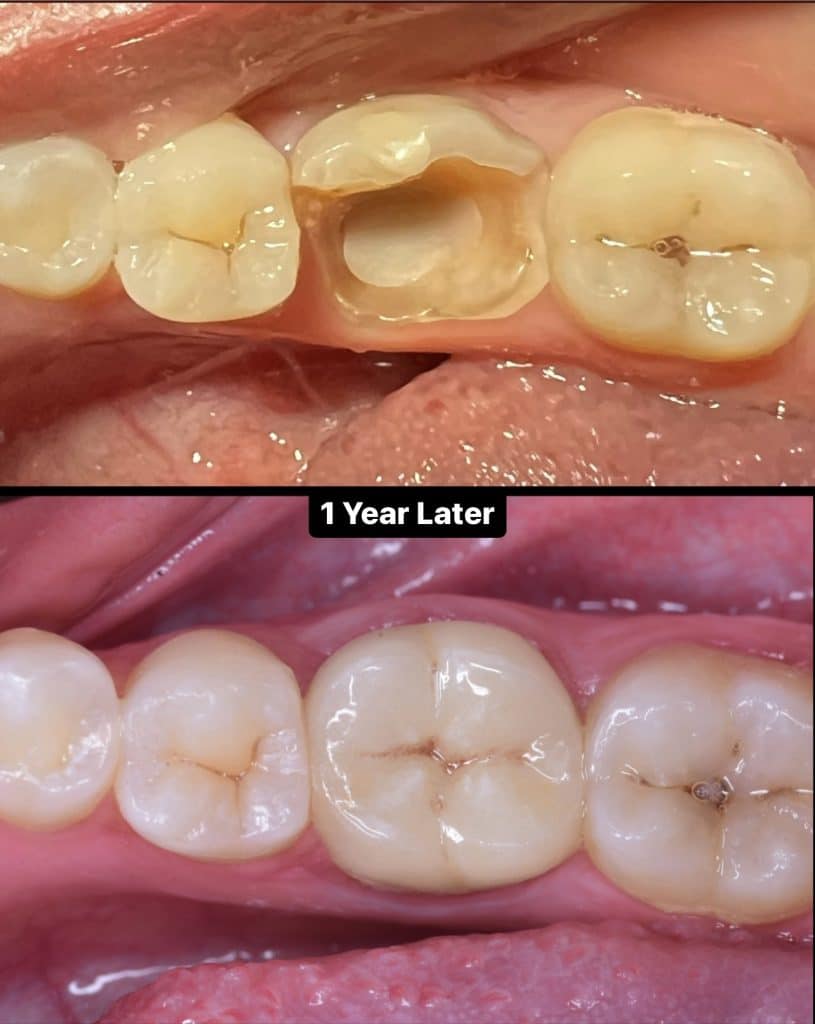
Pre-Operative and 1 Year later
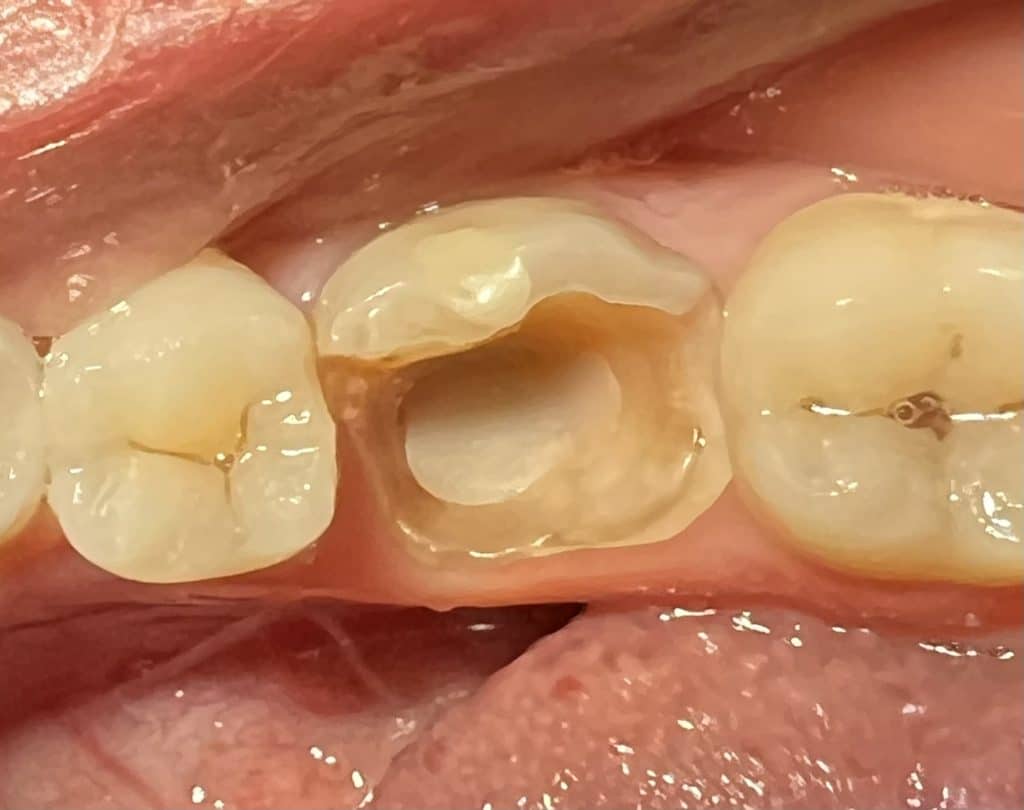
Pre-operative pic. , It was Endodontically treated by another dentist & fortunately he makes good occlusal sealing with good endodontic treatment , So I didn’t need to Re-treat

1- Removing the old composite
2-Go ahead with gaining good Dentin adhesion and as strong Hybrid layer as possible with IDS & RC then fiber-reinforced composite (Ever-x) as dentin replacement 3-DME was needed at mesio-lingual wall

Biobase & Our final design with minimal finish line to get as much Enamel as possible for best adhesion

Tooth & Biobase surface treatment
1-Sandblasting 2-Etching 3-Bonding Then it’s ready for Cementation

Treatment cycle for lithium disilicate surface
1-Alcohol Cleaning 2-Hydrofluoric acid 3-Phosphoric acid 4-Silane , The chalky white appearance gives a sign for good etching
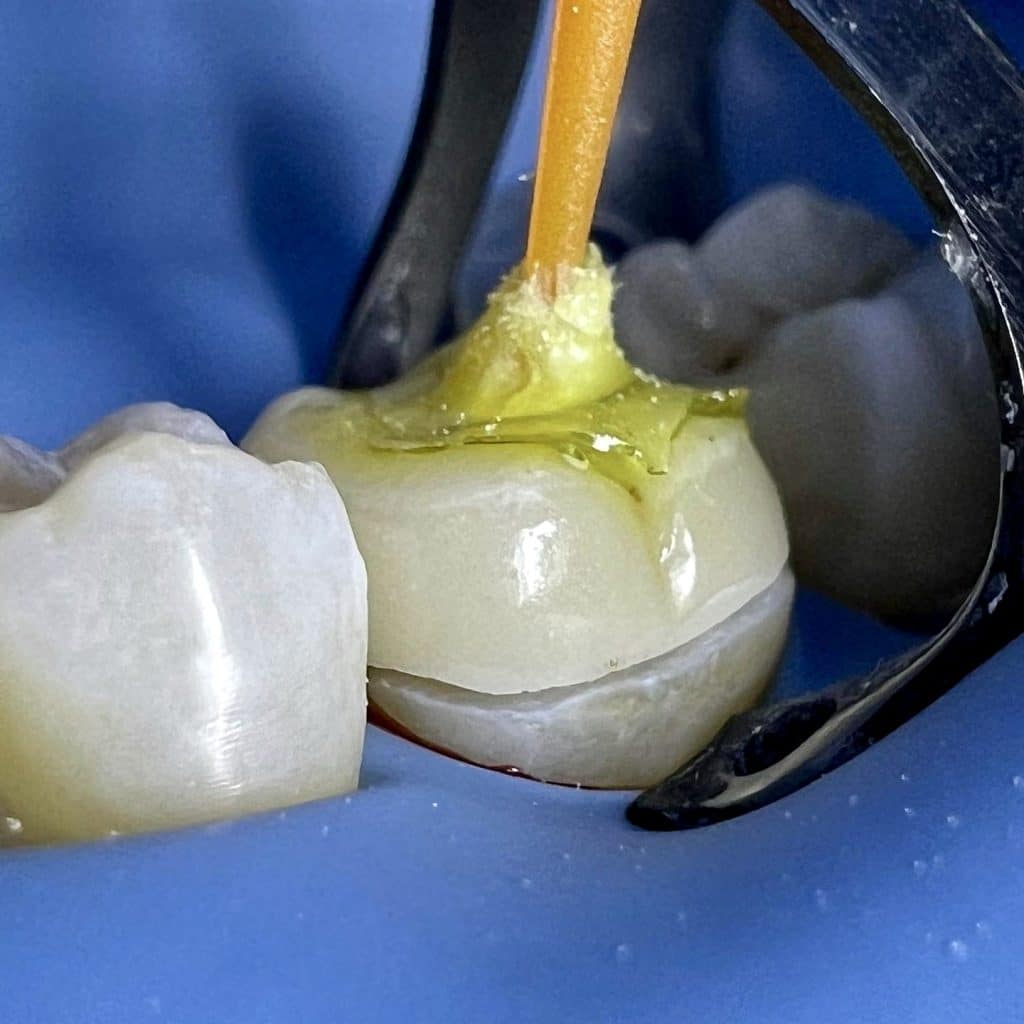
Try-In after being silanated .. Checking fitness and contact areas

Get Bonded with perfect margin adaptation

Immediately after being adhered

1 Year later , Healthy and Functional
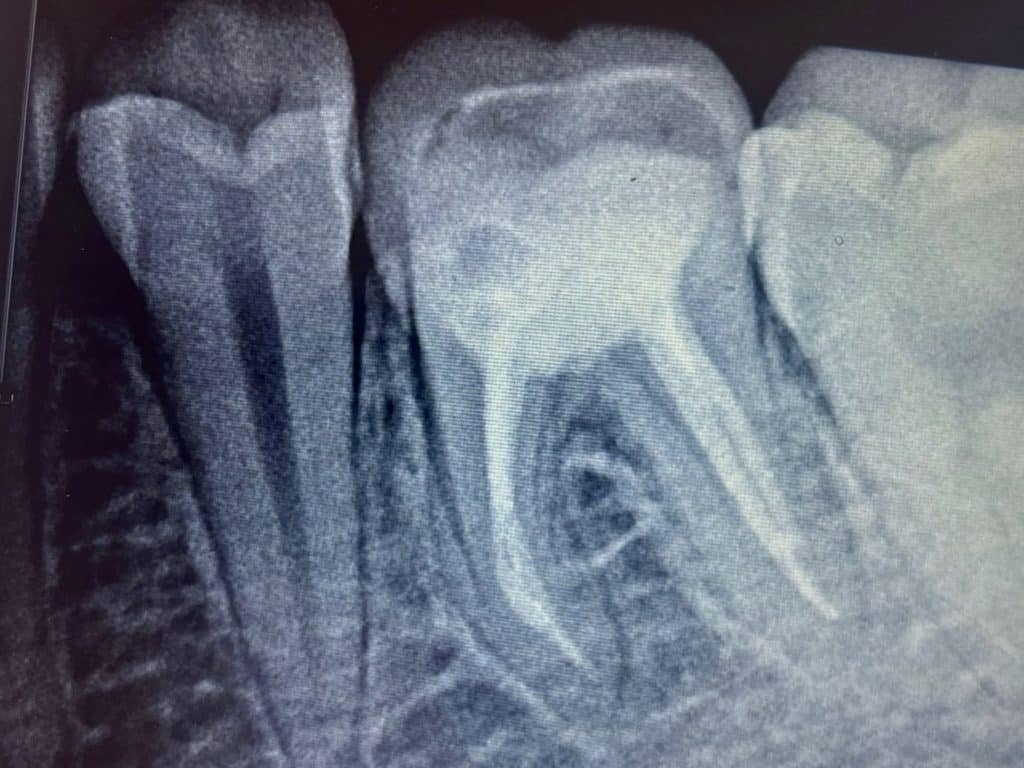
Post-Op Radiography
Share on:
