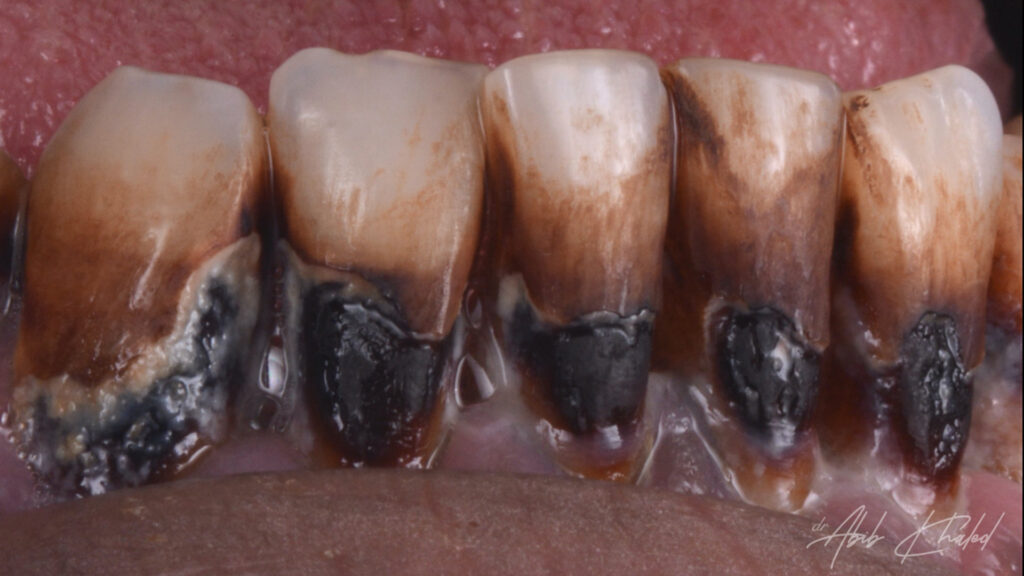
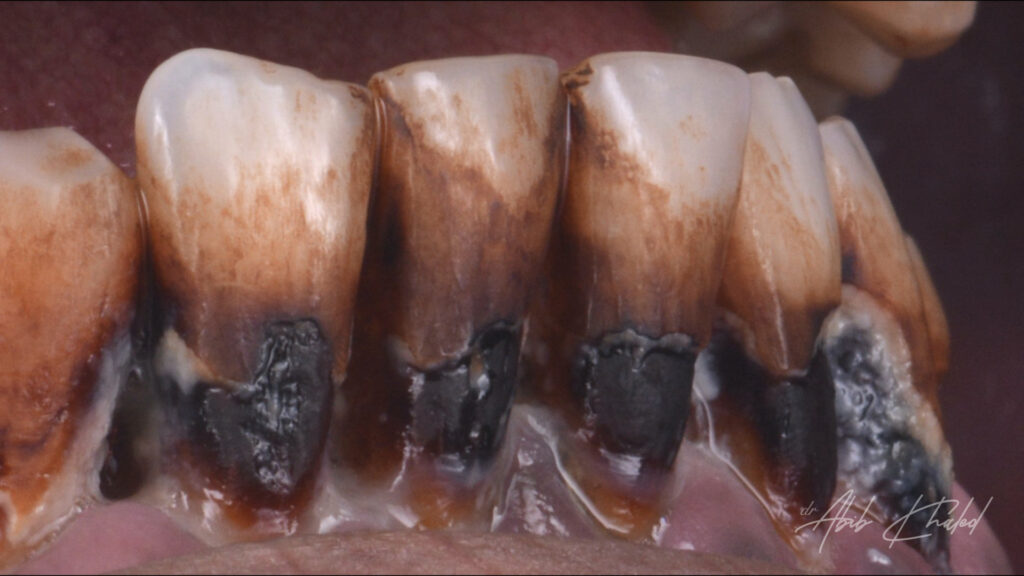
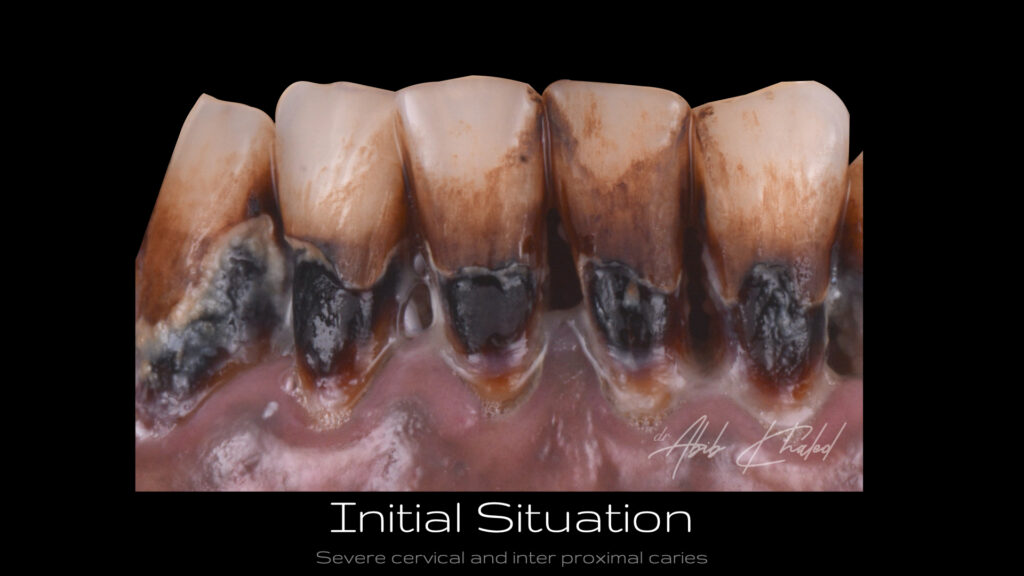
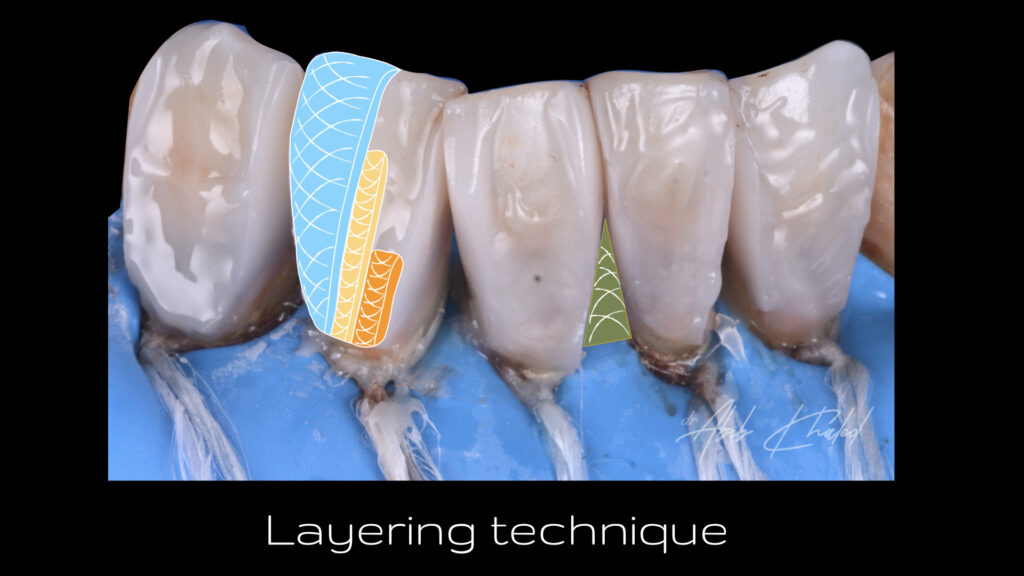
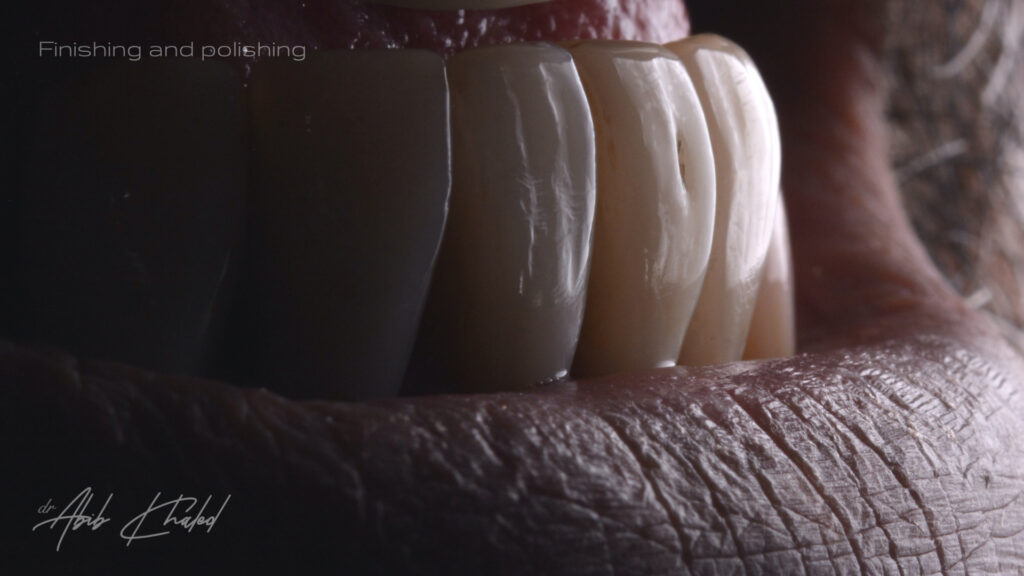
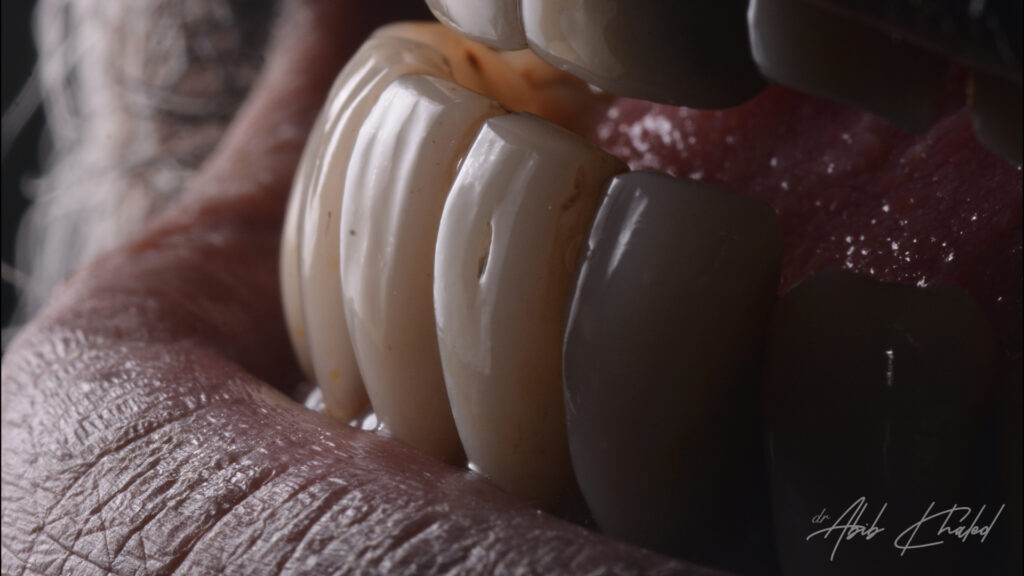
Clinical Case: Anterior smile rehabilitation following severe cervical and interproximal caries. Under optimal rubber dam isolation, the decay was removed and interdental matrices were adapted. A meticulous composite layering technique was used to rebuild the proximal walls and restore natural anatomy. The final post-operative result shows a seamless, highly aesthetic, and polished finish.
References :
1 .
Dietschi D, Fahl N Jr. Shading concepts and layering techniques to master direct anterior composite restorations: an update. Br Dent J. 2016 Dec 16;221(12):765-771. doi: 10.1038/sj.bdj.2016.944. PMID: 27981983.
2.
Devoto W, Saracinelli M, Manauta J. Composite in everyday practice: how to choose the right material and simplify application techniques in the anterior teeth. Eur J Esthet Dent. 2010 Spring;5(1):102-24. PMID: 20305875.
3.
Marufu C, Kisumbi BK, Osiro OA, Otieno FO. Effect of finishing protocols and staining solutions on color stability of dental resin composites. Clin Exp Dent Res. 2022 Apr;8(2):561-570. doi: 10.1002/cre2.555. Epub 2022 Mar 29. PMID: 35349747; PMCID: PMC9033545.
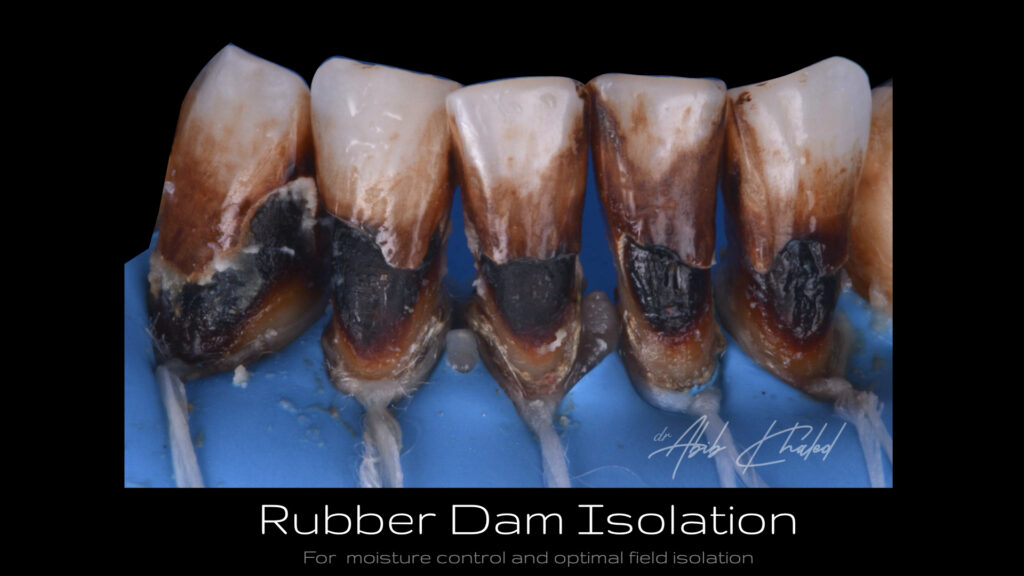
For moisture control and optimal field isolation
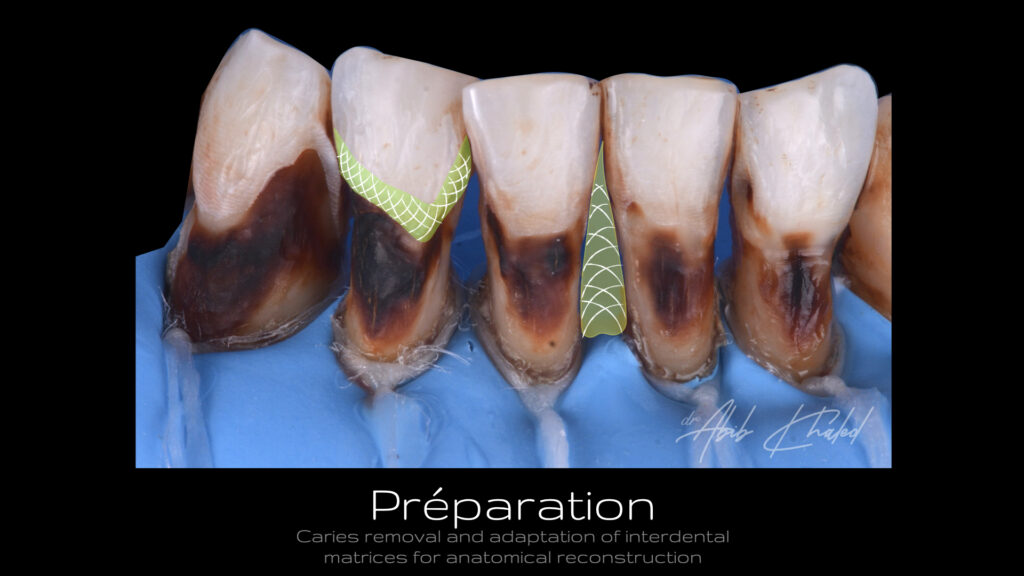
Caries removal and adaptation of interdental
matrices for anatomical reconstruction
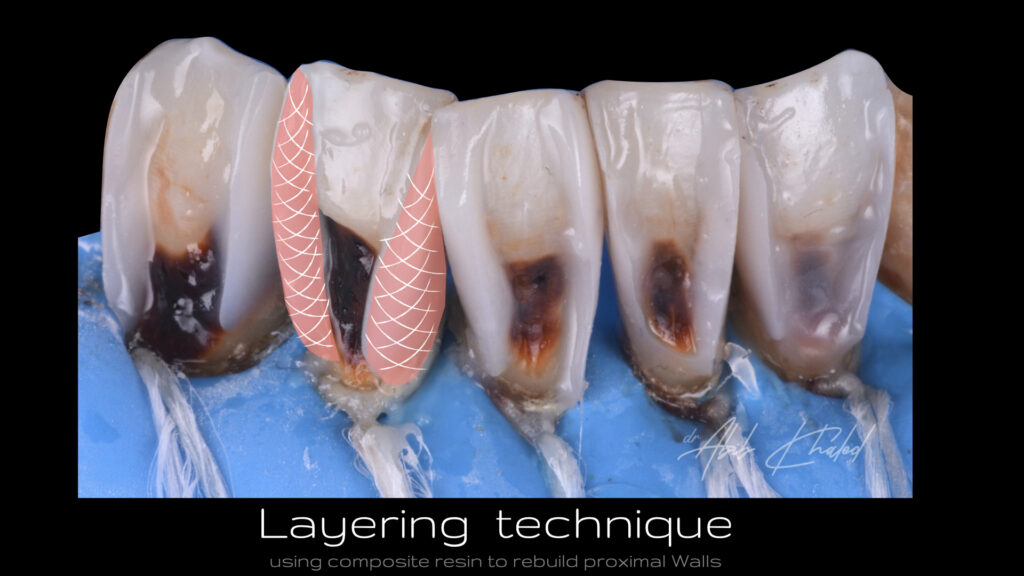
using composite resin to rebuild proximal Walls
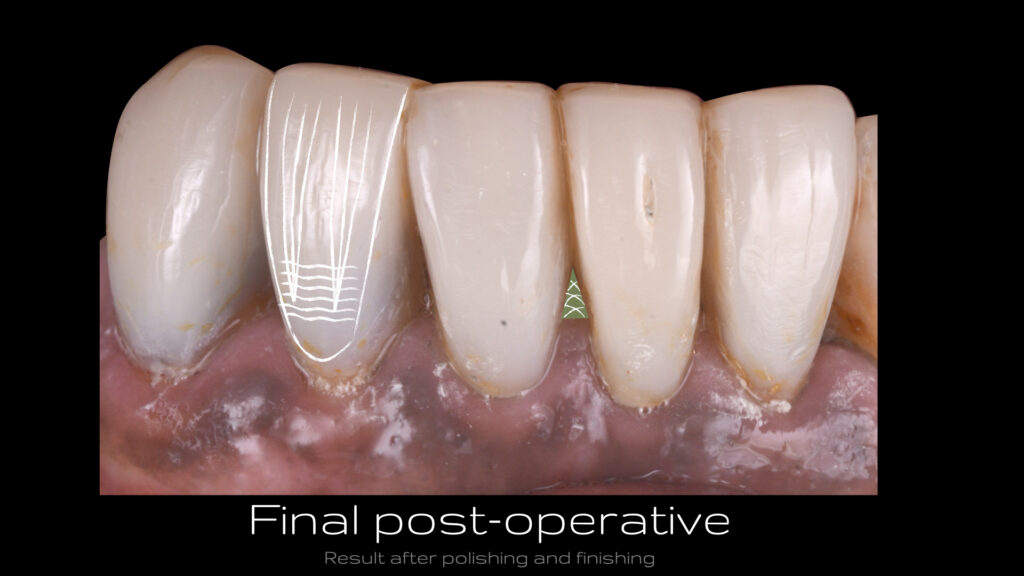
Result after finishing and polishing
Share on:
