Endo-Restorography in Biomimetic Dentistry: From Root Canal Therapy to Structural Reintegration
Abstract
Endodontic success is no longer defined solely by radiographic obturation but by the tooth’s ability to function long term under physiological loads. Endo-restorography represents the seamless integration of biologically respectful root canal therapy with structurally driven, adhesive restorative dentistry. This article outlines a biomimetic approach to endodontic treatment, focusing on preservation of tooth structure, stress distribution, and adhesive reinforcement to restore the tooth as a functional biomechanical unit.
Introduction
Traditional endodontics emphasized canal disinfection and obturation as the final goal of treatment. However, long-term failures often result not from endodontic infection, but from structural compromise, cuspal deflection, and catastrophic fractures following aggressive tooth preparation.
Biomimetic dentistry shifts this paradigm. The objective is not merely to fill canals, but to restore the tooth’s natural biomechanics, mimicking dentin-enamel behavior through conservative access, adhesive strategies, and stress-reducing restorations. Endo-restorography is the clinical execution of this philosophy.
Biological and Structural Principles
Preservation of Tooth Structure
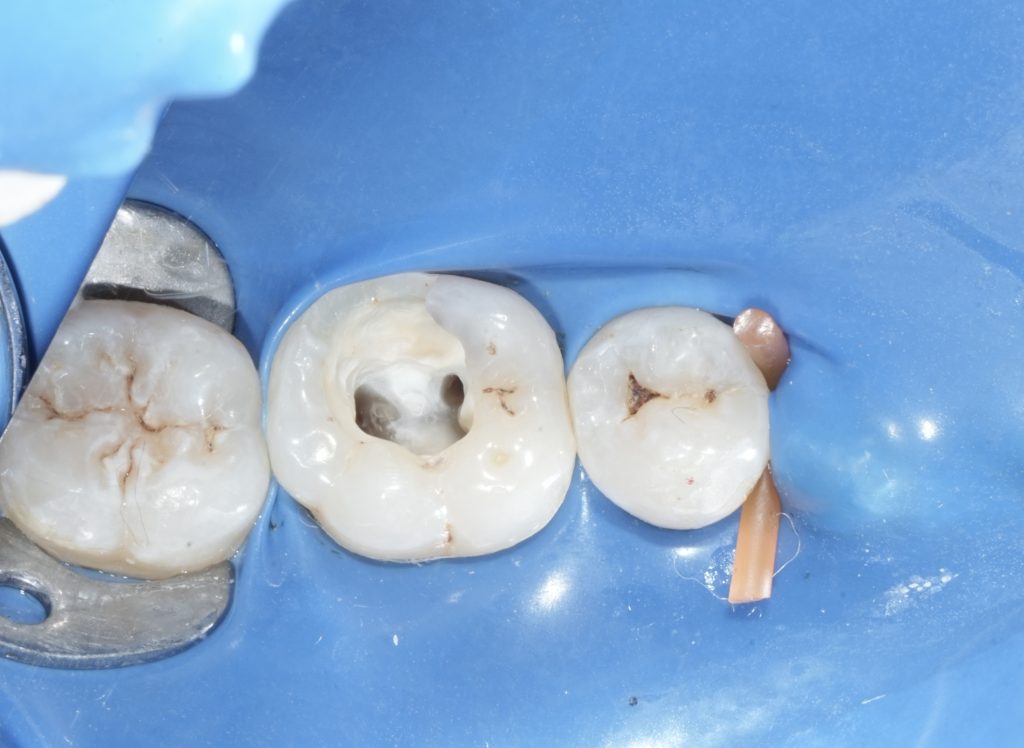
Access cavity design directly influences fracture resistance. Conservative endodontic access preserves pericervical dentin, which plays a critical role in stress transmission between crown and root. Excessive removal of dentin weakens the tooth irreversibly, regardless of obturation quality.
Respecting Pulp Chamber Architecture
The pulp chamber acts as a natural stress-absorbing structure. Maintaining chamber walls allows better bonding surface area for adhesive restorations and reduces cuspal flexure under occlusal load.
Endodontic Phase: Biomimetic Considerations
Cleaning and Shaping
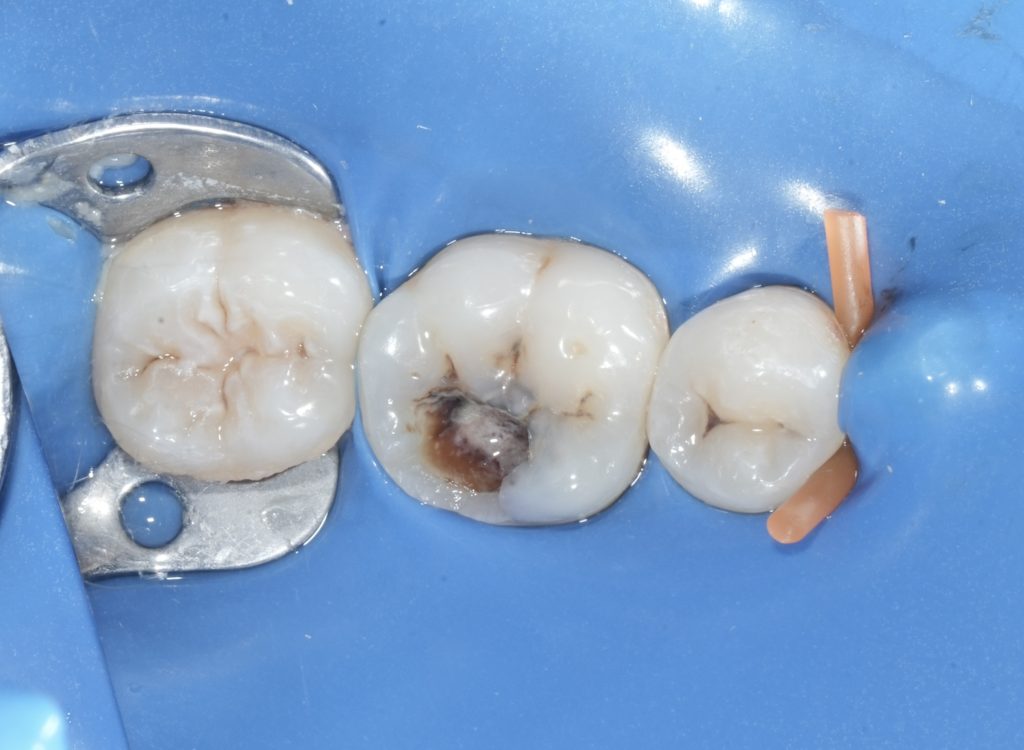
Canal shaping was performed using minimally invasive principles, avoiding excessive taper that compromises radicular dentin. Glide path establishment, controlled instrumentation, and copious irrigation ensured effective disinfection while preserving root strength.
Obturation Strategy
Warm vertical compaction was selected to achieve three-dimensional obturation while adapting gutta-percha to complex canal anatomy. This technique enhances canal sealing while maintaining controlled compaction forces, minimizing the risk of root fracture.
Obturation was terminated at an ideal apical stop, ensuring biological closure without extrusion or over-instrumentation.
Transition from Endodontics to Restoration
Immediate Coronal Seal
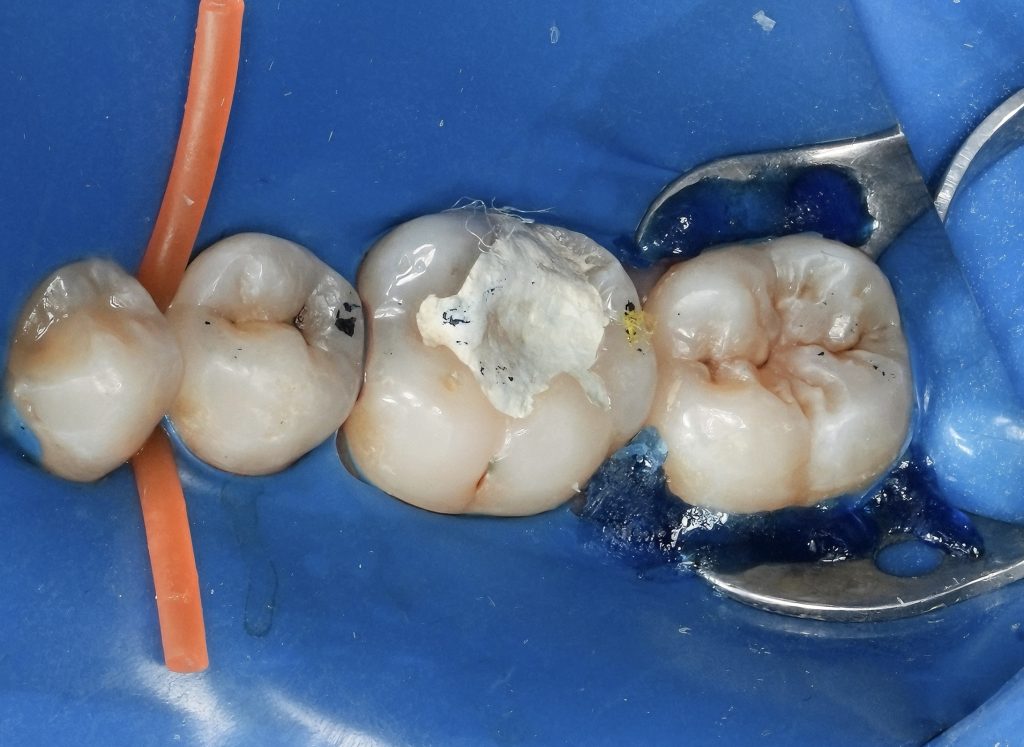
Immediate placement of a bonded coronal seal is a cornerstone of endo-restorography. Delayed or inadequate sealing allows bacterial ingress, undermining even the most technically sound endodontic treatment.
Immediate Dentin Sealing (IDS)
IDS was performed following endodontic completion to protect freshly cut dentin, enhance bond strength, and reduce postoperative sensitivity. This step is critical in biomimetic workflows, particularly when indirect or overlay restorations are planned.
Restorative Phase: Biomimetic Reintegration
Adhesive Strategy
A multi-step adhesive protocol was employed to maximize hybrid layer formation and dentin bonding. Proper moisture control and adhesive penetration ensure durable resin–dentin interfaces capable of resisting functional stresses.
Cuspal Coverage and Stress Management
Rather than relying on traditional full-coverage crowns, a biomimetic composite overlay approach was used. This allows selective reinforcement of weakened cusps while preserving intact tooth structure.
Composite materials with dentin-like modulus of elasticity were layered strategically to absorb occlusal forces, reduce stress concentration, and prevent crack propagation.
Occlusal Design
Occlusion was carefully refined to establish axial loading and eliminate lateral interferences. Proper occlusal anatomy is essential to prevent biomechanical overload and ensure longevity of the restored tooth.
Radiographic and Clinical Outcome
Postoperative radiographs confirmed dense, homogenous obturation with intact periapical structures. Clinically, the tooth demonstrated functional stability, absence of symptoms, and restored anatomy consistent with natural tooth morphology.
Discussion
Endo-restorography emphasizes that endodontic treatment is incomplete without biomechanically sound restoration. Teeth fail not because canals were inadequately filled, but because structural integrity was compromised.
Biomimetic dentistry provides a scientifically grounded framework to address this challenge by:
- Preserving dentin
- Reducing polymerization and occlusal stresses
- Reinforcing the tooth adhesively rather than mechanically
This integrated approach reduces the need for aggressive post placement and full crowns, aligning treatment with minimally invasive principles.
Conclusion
Endo-restorography represents the evolution of endodontics into restorative-biological harmony. By combining conservative root canal therapy with biomimetic adhesive restoration, clinicians can significantly enhance tooth longevity, function, and resistance to fracture. Success lies not in isolated procedures, but in respecting the tooth as a living biomechanical structure.
References
- Magne P, Belser U. Bonded porcelain restorations in the anterior dentition.
- Clark D, Khademi J. Modern molar endodontic access and directed dentin conservation.
- Schwartz R, Robbins J. Post placement and restoration of endodontically treated teeth.
- Torabinejad M, Parirokh M. Clinical applications of mineral trioxide aggregate.
- Dietschi D, Spreafico R. Adhesive metal-free restorations: current concepts.
{"source_type":"hypic","data":{"stickerId":"","pictureId":"2425D743-CA6B-49F5-95B2-65C7119B119B","playId":"","os":"ios","enter_from":"enter_launch","infoStickerId":"","filterId":"","appversion":"7.9.0","product":"retouch","imageEffectId":"","activityName":""},"tiktok_developers_3p_anchor_params":"{"client_key":"awgvo7gzpeas2ho6","capability_extra_v2":{"edit":[{"panel":"hd_quality_picture"},{"panel":"one_key_edit"}]},"template_id":"","filter_id":[],"capability_key":["edit"]}"}


{"tiktok_developers_3p_anchor_params":"{"filter_id":[],"template_id":"","capability_extra_v2":{"edit":[{"panel":"hd_quality_picture"}]},"client_key":"awgvo7gzpeas2ho6","capability_key":["edit"]}","source_type":"hypic","data":{"pictureId":"D44A4295-1730-4EA3-917F-147F059CACBD","appversion":"7.9.0","os":"ios","playId":"","enter_from":"enter_launch","activityName":"","filterId":"","imageEffectId":"","infoStickerId":"","stickerId":"","product":"retouch"}}

{"source_type":"hypic","data":{"activityName":"","playId":"","product":"retouch","pictureId":"689CCACC-3991-4945-B1BF-2D42077A199E","imageEffectId":"","filterId":"","os":"ios","stickerId":"","appversion":"7.9.0","infoStickerId":"","enter_from":"enter_launch"},"tiktok_developers_3p_anchor_params":"{"capability_key":["edit"],"filter_id":[],"template_id":"","client_key":"awgvo7gzpeas2ho6","capability_extra_v2":{"edit":[{"panel":"hd_quality_picture"}]}}"}


Share on:
